
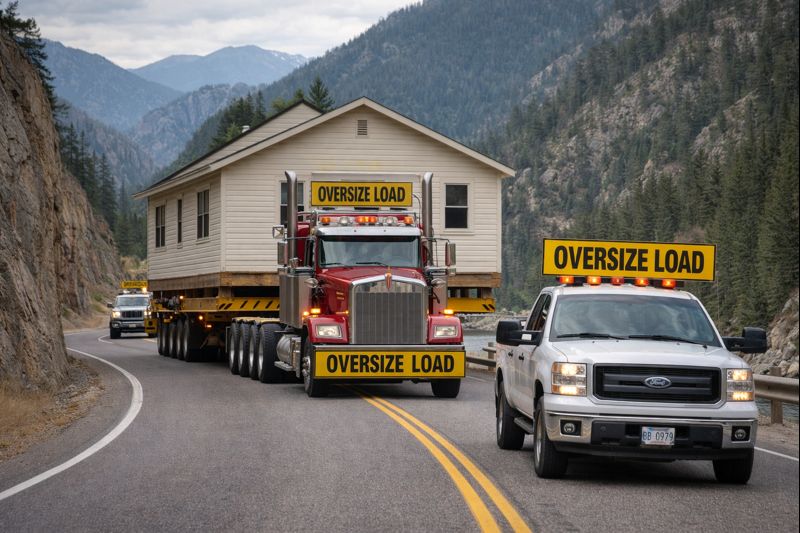
Oversized load transport in Idaho requires more than a large trailer and a capable truck. Moving overlegal freight safely across Idaho takes permit coordination, route analysis, height and width clearance planning, escort support when required, and an experienced transport team that understands how to move large equipment, structures, and specialty loads without creating unnecessary delays. From busy corridors near Boise to rural highways, bridges, grades, and narrow access points across the state, every oversized move demands careful preparation. If you need expert help with complex hauling, Associated Pacific Movers provides statewide support for large, heavy, and hard-to-move freight, and you can contact the team here to discuss project details.
What qualifies as an oversized load in Idaho
An oversized load is any vehicle, freight piece, or loaded combination that exceeds legal limits for width, height, length, or weight on public roads. In real-world terms, that can include large construction equipment, agricultural machinery, industrial tanks, steel components, modular sections, houses, and other freight that cannot move safely under standard dimensions. The moment a load crosses legal thresholds, planning becomes far more technical because route approvals, travel windows, escort needs, signage, and roadway restrictions all come into play.
That is why oversized transport should never be treated like standard freight delivery. A legal-size shipment can often move with basic dispatch and standard equipment, but a wide, tall, long, or heavy load needs a much deeper review before wheels ever start rolling. Clearance conflicts, turning radius issues, road weight limitations, traffic flow, construction zones, and local access points all need to be considered early. For larger machinery and multi-piece commercial freight, the safest starting point is usually a professional heavy equipment hauling service that can match the load to the right trailer, support equipment, and route strategy.
Why oversized load transport in Idaho requires detailed planning
Idaho is not a one-condition hauling environment. A move that seems simple on paper can become far more difficult when steep grades, seasonal weather, bridge clearances, utility conflicts, or tight approach roads are factored in. That is one of the biggest reasons oversized load transport in Idaho depends on planning, not guesswork. Teams need to confirm dimensions, axle groupings, securement methods, destination access, loading conditions, and safe unloading space before permits and scheduling are finalized.
For loads tied to larger relocation projects, transport planning may also overlap with structural preparation. If the move involves a lifted structure, raised foundation, or building being staged for relocation, related services such as building raising and house lifting services may be part of the broader timeline. On projects involving residential or commercial structures, it is also smart to review how professional crews handle full-scale relocation through home and building moving services in Boise.
Oversized load transport in Idaho permits and travel requirements
Permits are one of the most important parts of the process because they define how and when an oversized load can move. Permit terms may address route approval, travel times, overall dimensions, axle weights, required markings, escorts, and specific operating restrictions. Loads that move without the proper authorization can face delays, penalties, and major project disruption. More importantly, a permit is not just paperwork. It is part of the safety framework that helps reduce avoidable risks for the transport crew and the public.
Depending on the load and route, permit conditions may include daylight-only movement, weekday-only travel, restrictions around holidays, or added limitations in higher-traffic areas. That matters because many clients assume the biggest challenge is loading the freight, when the real challenge is often moving it legally and efficiently once it reaches the road. If the shipment is especially large, tall, or heavy, travel conditions may be more restrictive and require a tighter movement window.
When a project involves moving manufactured housing or transport-ready residential units, the permit side of the process can overlap with setup, staging, and destination coordination. For that reason, property owners comparing options should also review mobile home moving services if their project involves a transportable dwelling rather than general equipment freight.
Key permit and route considerations
- Overall width, height, length, and gross weight of the shipment
- Axle count, axle spacing, and trailer configuration
- State highway access versus county roads and city streets
- Bridge limitations, overhead utility conflicts, and narrow roadway segments
- Seasonal weather, construction activity, and traffic timing restrictions
- Origin access, destination access, and room for staging or unloading
- Whether escort vehicles, signage, flags, or additional safety measures are required
Route surveys, clearances, and road access matter more than most people think
One of the most expensive mistakes in oversized hauling is assuming a route is workable because it looks fine on a map. Digital mapping does not replace route intelligence. A route that appears direct may include a low overhead issue, a tight turn near an intersection, narrow shoulders, weak pavement, temporary road work, or approach conditions that make the final delivery much harder than expected. That is why experienced haulers evaluate both the highway path and the on-site access conditions.
Clearance review is especially important for high loads and structure-related moves. Utility lines, traffic signals, tree limbs, and sign structures can all affect whether a route is truly usable. If a load has unusual length or rear swing, intersection movement becomes another major concern. In some cases, the difference between a successful move and a delayed move comes down to whether the team caught one problem area early enough to adjust the plan. This is also why larger relocation jobs often benefit from reading related guidance on topics like what permits are required for building relocation in Idaho and how structure lifting specialists prevent foundation damage.
How oversized load transport in Idaho is affected by terrain and weather
Terrain changes the transport equation fast. Mountain grades can affect power, braking, speed control, and spacing. Rural routes may present narrow lanes, soft shoulders, or limited pull-off areas. Winter conditions can affect traction, visibility, and timing, while spring and fall can introduce wet access points or unstable ground at loading and unloading locations. That is why proper scheduling matters almost as much as the equipment itself.
Weather is not just a comfort issue. It affects safety, traffic, timing, and the condition of the route. Oversized moves often need a wider operational buffer because a small weather delay can trigger a permit window change, labor rescheduling, or destination access problem. Experienced teams build realistic timing into the plan rather than overpromising a move date that depends on ideal conditions.
Escort vehicles, signage, and roadway safety measures
Safety measures exist for a reason. When a load takes more space than normal traffic expects, the transport team has to create visibility and manage risk well before other drivers reach the shipment. That is where escort vehicles, warning signs, flags, lighting, and communication protocols become critical. Not every move needs the same support, but larger dimensions often trigger added requirements designed to protect the road, the crew, and the public.
Escort vehicles can help warn approaching traffic, support lane control awareness, assist with difficult turns, and identify hazards ahead of the transport unit. For very tall loads, additional clearance monitoring may be necessary. For wide loads, urban turns and narrow sections may require tighter coordination. The exact support depends on the permit and the route, but the underlying goal stays the same: move the load safely without creating unnecessary risk.
| Transport element | Why it matters | Typical impact on the move |
|---|---|---|
| Escort vehicles | Improves visibility and traffic awareness | Can be required based on dimensions and route conditions |
| Route review | Helps avoid clearance and access conflicts | May change scheduling, equipment choice, or delivery sequence |
| Permit timing | Controls when movement can occur | Can affect staffing, destination readiness, and travel windows |
| Securement and trailer match | Protects load stability during transport | Incorrect setup increases risk, delay, and damage exposure |
What affects the cost of oversized load transport in Idaho
Cost depends on far more than mileage. The final price is shaped by the size and weight of the load, trailer type, route complexity, loading conditions, permit needs, escort support, labor, fuel, and delivery difficulty. A short move with poor access can cost more than a longer move on a clean route. Likewise, a shipment that needs extra staging, lifting, or temporary route adjustments will require more coordination than a straightforward transport job.
Clients often focus on hauling distance first, but cost usually rises faster when any of the following increase: unusual dimensions, route restrictions, hard-to-access delivery points, utility coordination, after-hours scheduling needs, or multiple loading and unloading steps. The best pricing conversations start with accurate dimensions, realistic site photos, and clear information about where the load begins and where it has to end up.
Common cost drivers
- Permit fees and route approvals
- Escort vehicle requirements
- Specialized trailers or dollies
- Crane, jacking, or lifting support when needed
- Longer travel windows due to restrictions
- Urban delivery challenges or tight rural access
- Weather-related rescheduling and standby time
- Multi-day coordination for complex projects
If your project includes relocating a building, large section, or structure that needs elevation work before transport, the overall cost picture can change quickly. In those cases, reviewing related topics like what affects the price on a building relocation cost estimator and when you should hire foundation raising contractors in Idaho can help clarify where budget pressure usually comes from.
Choosing the right company for large and overlegal hauling
Not every transport company is built for oversized work. The right team should understand load securement, route planning, permitting, staging, and destination access, not just towing capacity. Experience matters because large moves rarely stay simple from start to finish. A qualified company knows how to identify risk early, explain options clearly, and coordinate the job so the client is not left chasing updates from multiple parties.
When comparing providers, ask how they handle permit coordination, access reviews, escort planning, weather delays, and unusual delivery conditions. Ask what equipment they would use for your specific load and whether they have experience with freight similar to yours. You can also review the company’s broader moving and transport services to see whether they routinely handle houses, buildings, heavy equipment, and other specialized loads rather than only standard freight work.
Questions worth asking before you hire
- Have you moved loads with similar dimensions or weight before?
- Will you coordinate permits and route planning, or is that separate?
- Do you handle escort scheduling when required?
- What trailer setup fits this shipment best?
- Have you reviewed both origin and destination access conditions?
- What delays are most likely for a move like this?
- How do you communicate timing changes during transport?
How to prepare your load before transport day
Good preparation reduces risk and protects the schedule. Before transport day, the shipper should confirm accurate dimensions, remove loose parts where possible, identify pickup and delivery contacts, and provide photos that show access conditions, overhead obstacles, and surface conditions. If the load is equipment, any moving parts or attachments should be secured according to the hauler’s instructions. If the move involves a structure or building section, stabilization and lifting prep may need to be completed in advance.
It is also important to think beyond the highway. A load can travel perfectly across the state and still face delays at the final entry point if gates are too narrow, turning space is limited, or the unloading zone is not ready. On projects with multiple moving parts, a short pre-move checklist can prevent expensive day-of problems.
Pre-move checklist
- Confirm final dimensions and weight
- Share recent site photos from pickup and delivery locations
- Identify narrow driveways, soft ground, overhead lines, and gate widths
- Clear staging areas before arrival
- Verify who will be on-site for loading and unloading decisions
- Discuss timing early if weather or access is a concern
Related transport questions people often ask
Large-load clients often have overlapping concerns, especially when the move is part of a broader relocation or site-prep project. Some are trying to understand route restrictions, while others want to know how long a structure move takes, how damage is prevented, or what equipment is required for safe transport. Helpful related reading includes how modular building transport works, what to know about modular home transportation, and overcoming challenges in large object transportation across Idaho.
For official Idaho permit and commercial vehicle guidance, you can also review the Idaho Transportation Department permit resources.
Frequently asked questions about oversized load transport in Idaho
How long does oversized load transport in Idaho take to plan?
Planning time depends on the load, route, and permit conditions. A straightforward move may be scheduled faster than a very large or difficult shipment, but complex jobs often need more lead time for route review, coordination, and access planning.
Do all oversized loads need escort vehicles?
No. Escort needs depend on the load dimensions, route conditions, and permit terms. Some shipments require none, while others require one or more escort vehicles to support safety and traffic awareness.
Can oversized loads move through Boise and other higher-traffic areas?
Yes, but timing, route choice, and permit conditions become more important in busier corridors. Larger loads may face tighter movement windows and added planning requirements in and around urban traffic patterns.
What is the biggest mistake people make before booking transport?
One of the most common mistakes is giving incomplete dimensions or overlooking pickup and delivery access conditions. Accurate measurements and realistic site details help avoid permit issues, equipment mismatches, and schedule delays.
Is oversized load transport only for heavy equipment?
No. It can also apply to structures, building sections, manufactured housing, industrial components, tanks, and other freight that exceeds standard road limits.
What should I have ready before requesting a quote?
It helps to provide the load dimensions, approximate weight, photos, pickup and delivery addresses, and any known access limitations. The more accurate the details, the more accurate the transport plan and pricing discussion will be.
Talk with an Idaho oversized load transport team
When the load is too large for standard hauling, planning and experience make all the difference. Associated Pacific Movers handles demanding transport projects involving equipment, structures, and specialty loads across Idaho. If you need help coordinating a move, reviewing route concerns, or scheduling a transport team with the right equipment for the job, visit the contact page or return to the homepage to learn more about the company’s full capabilities.