
Transporting large objects requires far more than a truck, trailer, and destination. Homes, modular buildings, industrial equipment, agricultural machinery, tanks, structural components, and other oversized loads often require detailed route planning, permit coordination, specialty equipment, escorts, utility coordination, site preparation, and experienced load-handling crews. Large object transportation is a highly planned process because one missed clearance, one weak road segment, or one unaccounted-for turn can delay the move or create serious safety risks. Whether the load is a building, a piece of heavy equipment, or a specialized commercial asset, successful transportation starts with understanding the challenges before the load ever leaves the site.
What Makes Large Object Transportation So Complex?
Large object transportation is different from standard freight because the load often exceeds normal legal dimensions, weight limits, or maneuverability standards. A regular shipment can usually travel on standard routes with minimal planning. Oversized and overweight loads require a much more controlled process. The transportation team must determine whether the object can be loaded safely, whether the selected equipment can support it, whether the route can accommodate it, and whether permits or escorts are required.
The complexity increases when the object is fragile, irregularly shaped, extremely heavy, unusually tall, or difficult to secure. A house, for example, must remain structurally stable while being lifted, supported, transported, and set down. Industrial equipment may have delicate operating components that cannot be twisted, jarred, or exposed to the wrong conditions. Agricultural machinery may be wide, heavy, and difficult to maneuver through narrow roads or worksite access points. Each object brings its own risks.
Professional transport planning is designed to reduce those risks. Teams evaluate the load, route, equipment, timing, weather, permits, safety requirements, and site access before the move begins. For structural moves that require lifting before transport, building raising and house lifting services may be part of the overall preparation process.
Large Object Transportation Starts With Load Assessment
The first step is understanding the load itself. Size alone does not tell the full story. Weight distribution, center of gravity, structural condition, tie-down points, material type, and load sensitivity all influence the transportation plan. A load that is evenly balanced may be easier to move than a smaller object with an awkward center of gravity. A building with weakened framing may require reinforcement before it can be lifted or transported safely.
Important Load Assessment Factors
- Overall height, width, length, and weight
- Weight distribution and center of gravity
- Structural strength and existing damage
- Fragile components, attachments, or exposed systems
- Available lifting, jacking, or rigging points
- Required trailer type and support configuration
- Clearance needs during loading, travel, and unloading
Common Challenges in Large Object Transportation
Large object transportation involves several predictable challenges, but the way those challenges show up depends on the object, route, site conditions, and timing. The best moves are not the ones with no obstacles. They are the ones where obstacles are identified early and handled before they become expensive problems.
Route Restrictions and Clearance Issues
Route planning is one of the most important parts of any oversized move. Large objects cannot always take the shortest route. The best route is the route that can safely handle the height, width, weight, and turning radius of the load. Low bridges, overhead wires, tree limbs, narrow streets, steep grades, tight intersections, and weak road shoulders can all force detours or require additional coordination.
Route surveys help identify these issues before moving day. A survey may include checking bridge clearances, road widths, turn radiuses, railroad crossings, traffic patterns, overhead utilities, road grades, and staging areas. For structural moves, the route must also account for the width and height of the building after it is placed on transport equipment.
Route Problems That Can Disrupt an Oversized Move
- Low bridges, signs, or overhead structures
- Power, cable, or communication lines that conflict with load height
- Narrow roadways, shoulders, or access roads
- Sharp turns that do not allow enough trailer swing
- Weight-restricted bridges or road sections
- Steep grades, uneven pavement, or unstable shoulders
- Congested areas that require traffic control or scheduling restrictions
Permits, Regulations, and Oversized Load Requirements
Oversized and overweight transportation is regulated because large loads affect public safety, traffic flow, and infrastructure. Permit requirements vary by jurisdiction, road authority, dimensions, weight, travel route, and timing. A move may require oversize load permits, overweight permits, route approvals, escort vehicles, travel time restrictions, and documentation showing that the route can support the load.
Permit planning should happen early. Waiting too long can delay the schedule, especially when the move involves multiple jurisdictions, unusual dimensions, or public infrastructure concerns. For general information about oversize and overweight vehicle permitting practices, the Federal Highway Administration provides a useful overview of how permitting affects freight movement and roadway safety.
Common Permit and Compliance Considerations
- Oversize load permit requirements
- Overweight permit requirements
- Approved route restrictions
- Escort vehicle requirements
- Daylight travel limits or restricted travel windows
- Holiday, weekend, or peak traffic limitations
- Coordination with road authorities, utility providers, or local officials
Equipment Selection for Large Object Transportation
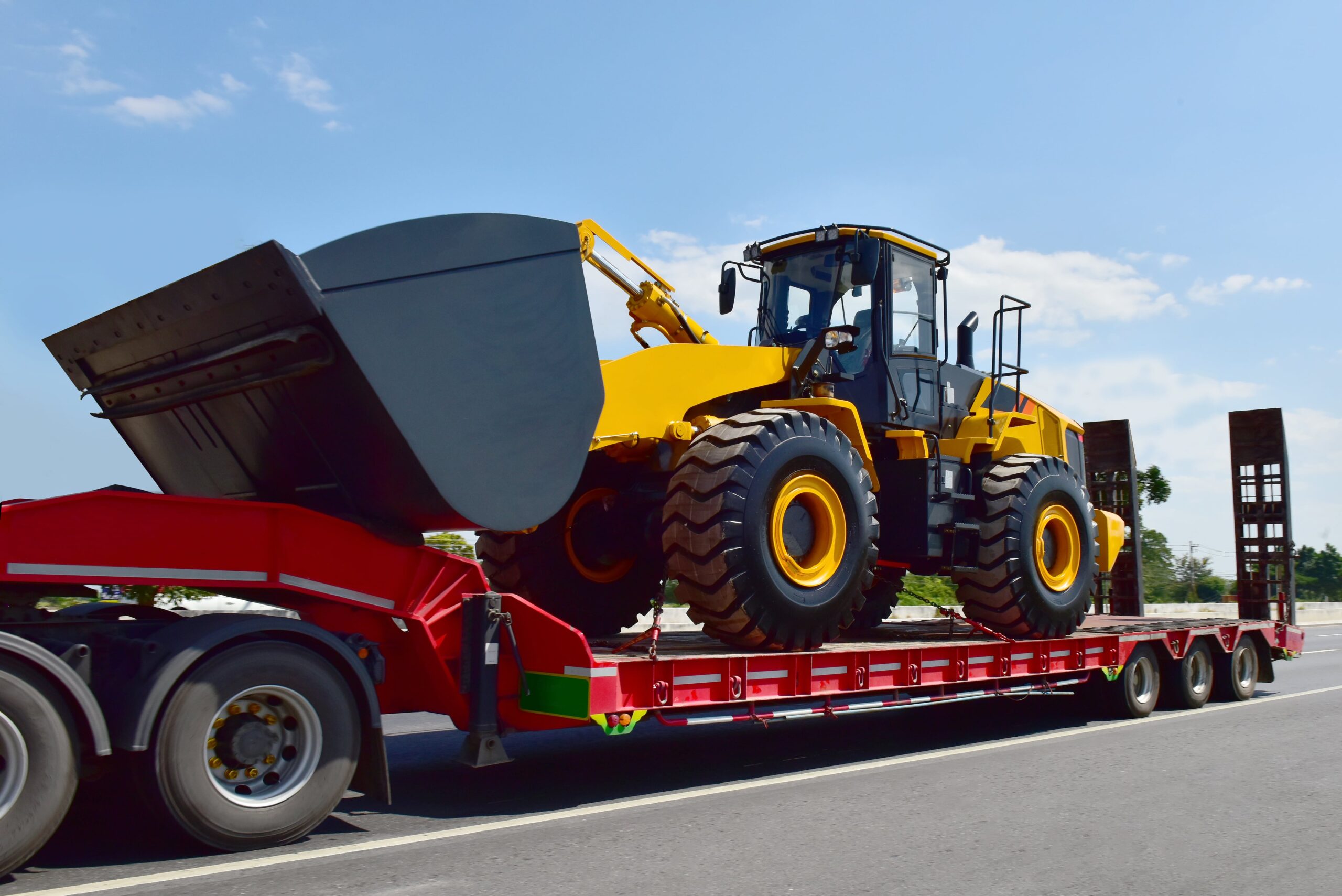
The equipment used for large object transportation must match the load. Choosing the wrong trailer, support system, or securing method can create safety risks even if the route and permits are correct. Specialized moves may require lowboy trailers, extendable trailers, hydraulic platform trailers, dollies, steerable transport systems, steel beams, cribbing, jacks, rigging, or custom support frames.
Why Trailer Type Matters
Trailer selection affects load height, stability, weight distribution, turning ability, and clearance. A lowboy trailer may be used when height must be reduced for bridge clearance. Extendable trailers may be used for long structural components or oversized machinery. Hydraulic trailers can help adjust load height and maintain stability on challenging routes. For building moves, steel beam systems and specialized dollies are often used to support the structure during transport.
Heavy equipment and machinery moves may require a different setup than building relocation. When the object is a machine, tank, commercial unit, or industrial asset, heavy equipment hauling services may involve equipment selection, loading plans, tie-down methods, and transport support tailored to that specific asset.
Common Equipment Used for Oversized Loads
- Lowboy trailers for taller or heavier loads
- Extendable flatbeds for long structural components
- Hydraulic trailers for height adjustment and stability
- Specialized dollies for building and structure moves
- Steel beams and cribbing for structural support
- Rigging equipment for loading and positioning
- Escort vehicles and warning systems for traffic safety
Load Securement and Structural Protection
Securing a large object is not just about preventing movement. It is about protecting the load from stress, vibration, flexing, twisting, and impact. Large objects often need support at specific points to avoid damage. A building may need bracing to prevent wall movement. Machinery may need padding, blocking, or isolation to protect sensitive components. Long objects may need multiple support points to prevent sagging during transport.
Protection Methods Used During Transport
- Structural bracing to reduce movement
- Blocking and cribbing to distribute weight
- Padding and protective coverings for sensitive surfaces
- Load-rated tie-down systems
- Weather protection for exposed materials or components
- Vibration control for delicate machinery or equipment
Site Access Challenges Before and After the Move
Transportation does not begin on the roadway. It begins at the pickup site. If the object cannot be accessed, lifted, loaded, or moved out of the property safely, the route does not matter yet. Site access is one of the most underestimated parts of large object transportation. The same is true at the destination site. The load must be unloaded, positioned, set down, or installed without damaging the object, property, equipment, or surrounding area.
Pickup Site Preparation
Before the move, crews need room to inspect the object, position equipment, stabilize the load, and create a safe exit path. Obstacles such as fences, trees, sheds, landscaping, retaining walls, soft ground, ditches, uneven surfaces, or tight driveways may need to be addressed before transportation can begin. In some cases, temporary access roads or ground protection mats may be needed to support heavy equipment.
Pickup Site Details That Affect the Plan
- Driveway width and turning space
- Ground firmness and slope
- Nearby buildings, fences, trees, or landscaping
- Utility lines, septic systems, irrigation lines, or underground obstructions
- Equipment staging space
- Load orientation and exit path
Destination Site Readiness
The destination site must be ready before the load arrives. For machinery, that may mean a prepared pad, reinforced floor, or clear installation area. For a building, it may mean a completed foundation, accessible approach path, and enough room for transport equipment to maneuver. If the destination is not ready, the move can stall, creating extra costs and scheduling problems.
Why Final Placement Needs Planning
Large object transportation is not complete until the object is safely placed where it belongs. Final placement may require lowering, leveling, anchoring, reconnecting, aligning, or transferring the object from one support system to another. The more precise the final placement needs to be, the more planning is required.
Small Site Issues Can Create Big Delays
A narrow gate, soft ground, an incomplete foundation, or a missing utility disconnect can stop a large move at the worst possible time. Final site checks help confirm that the destination is ready before equipment, crews, escorts, and permits are already in motion.
Weather and Timing Challenges in Large Object Transportation
Weather can affect visibility, traction, ground stability, load protection, and crew safety. Rain can soften access roads and staging areas. Wind can make tall or wide loads harder to control. Snow and ice can create traction problems. Heat can affect equipment, road conditions, and crew scheduling. Even when the roadway is clear, weather at the pickup or destination site can create problems for loading or final placement.
Why Wind Matters for Oversized Loads
Wind is a serious issue for tall, broad, or lightweight loads because it can create lateral force during travel. Large flat surfaces, such as building walls, panels, tanks, or modular sections, can act like sails in high wind. Professional transport teams monitor forecasts and may adjust timing when wind speeds create safety concerns.
Ground Conditions After Rain or Snow
Soft ground can affect jacks, trailers, cranes, dollies, and support systems. Even if the highway route is acceptable, wet or unstable soil at the pickup or destination site can prevent safe loading or unloading. Ground protection, temporary mats, gravel access improvements, or schedule adjustments may be needed.
Traffic Control and Public Safety Planning
Large object transportation affects other road users. Oversized loads may move slowly, use more than one lane, need extra turning space, or require temporary stops. Safety planning protects the crew, the load, and the public. Depending on the route and load size, this may involve escort vehicles, warning lights, signage, temporary traffic control, law enforcement coordination, or planned travel windows.
Escort Vehicles and Communication
Escort vehicles help warn traffic, guide the transport driver, monitor road conditions, and assist with tight turns or temporary stops. Clear communication between the driver, escorts, and support crew is essential. Radios, pre-planned signals, and route briefings help the team respond quickly when conditions change.
Public Safety Measures Often Used During Large Moves
- Front and rear escort vehicles
- Warning lights, flags, signs, and high-visibility markings
- Temporary traffic pauses or controlled intersections
- Coordination with local road authorities when required
- Pre-route briefings for drivers and escort teams
- Emergency pull-off planning
Large Object Transportation Planning Checklist
The checklist below shows how many details must be reviewed before a large object can be moved safely. Not every project requires every item, but skipping the wrong item can create major problems.
| Planning Area | What Must Be Reviewed | Why It Matters |
|---|---|---|
| Load assessment | Dimensions, weight, balance, structure, fragility | Determines equipment, support points, and handling method |
| Route planning | Clearances, turns, grades, bridges, traffic, road width | Prevents route conflicts, delays, and unsafe travel conditions |
| Permits | Oversize, overweight, route, escort, timing requirements | Keeps the move compliant and avoids preventable delays |
| Equipment | Trailer type, jacks, dollies, beams, rigging, tie-downs | Protects the load and supports safe handling |
| Site access | Driveways, slopes, ground conditions, obstacles, staging space | Allows safe loading, movement, and unloading |
| Weather | Wind, rain, snow, heat, visibility, ground stability | Protects the crew, load, equipment, and public |
How Experienced Teams Solve Oversized Transport Problems
Large object transportation is rarely a straight-line process. Conditions change, obstacles appear, and project details evolve. Experienced crews know how to adapt without compromising safety. They understand how to adjust loading methods, change support points, revise travel timing, coordinate with outside parties, and protect the object when unexpected issues come up.
Pre-Move Planning Reduces Risk
The most successful moves are planned in detail before equipment arrives. Pre-move planning may include a site visit, load inspection, route survey, permit review, equipment selection, utility coordination, traffic control planning, and destination readiness check. For building moves, the planning may also include structural reinforcement, lifting strategy, and final placement sequencing.
When moving a whole structure, the process often overlaps with specialized building relocation work. The overview of how structural relocation contractors move entire homes explains how lifting, route preparation, transport, and final placement work together during a full structural move.
Signs a Move Needs Specialty Planning
- The load exceeds standard legal width, height, length, or weight limits
- The object is fragile, historic, or difficult to replace
- The route includes bridges, utility conflicts, steep grades, or tight turns
- The pickup or destination site has limited access
- The move requires lifting, jacking, bracing, or structural reinforcement
- The project involves multiple agencies, permits, escorts, or utility providers
Why Large Object Transportation Should Not Be Improvised
Improvising an oversized move can create serious consequences. Poor route planning can lead to bridge strikes, utility conflicts, blocked roads, or unsafe turns. Inadequate support can damage the load. Incorrect equipment can create instability. Missing permits can delay the project or stop the move entirely. Weak site preparation can leave crews unable to load or unload safely.
Professional transportation teams bring the experience, equipment, and planning discipline needed to move large objects safely. That does not mean every move is easy. It means the challenges are identified, evaluated, and handled with the right process. For property owners and businesses, that level of planning protects the object, the schedule, the budget, and the people involved.
Questions to Ask Before Moving a Large Object
- Has the object been measured and weighed accurately?
- Has the route been checked for clearance, width, grade, and bridge restrictions?
- Are permits, escorts, or travel time restrictions required?
- Is the pickup site ready for loading equipment?
- Is the destination site ready for unloading or final placement?
- Does the load require bracing, padding, weather protection, or structural support?
- What conditions could delay or change the move?
Frequently Asked Questions About Large Object Transportation
What is considered large object transportation?
Large object transportation usually refers to moving items that are too large, too heavy, too tall, too wide, or too difficult to handle with standard freight equipment. Examples include homes, modular buildings, industrial machinery, tanks, agricultural equipment, structural components, and oversized commercial assets.
Why do oversized loads need special permits?
Oversized loads need permits because they may exceed standard roadway limits for width, height, length, or weight. Permits help transportation authorities review the route, protect infrastructure, manage traffic impacts, and confirm safety requirements such as escorts or restricted travel times.
What makes transporting a house different from transporting machinery?
A house must remain structurally stable during lifting, support, transport, and final placement. Machinery is usually moved as equipment, which may require different securement methods, trailer types, and protection for mechanical components. Both require planning, but the risks and handling methods are different.
How are routes chosen for large object transportation?
Routes are selected based on clearances, road width, bridge capacity, turn radius, grades, overhead utilities, traffic conditions, permit requirements, and site access. The safest route is not always the shortest route.
Can weather delay large object transportation?
Yes. Weather can delay a move when wind, rain, snow, ice, poor visibility, soft ground, or extreme temperatures create unsafe conditions. Tall or wide loads can be especially sensitive to wind, while heavy loads may be affected by unstable ground at pickup or destination sites.
What should be done before scheduling a large object move?
Before scheduling, the object should be measured, photographed, inspected, and evaluated for weight, structure, and access. The pickup and destination sites should be reviewed, and the route should be checked for clearance, permits, escorts, weather concerns, and timing restrictions.
Talk With a Large Object Transportation Team
Large object transportation succeeds when the load, route, permits, equipment, site access, timing, and safety details are planned before moving day. Associated Pacific Movers, Inc. has extensive experience moving homes, buildings, machinery, equipment, and other complex loads that require more than standard transportation. From structural lifting to route planning and heavy hauling support, the team understands how to move large objects with the planning and care they require. Contact Associated Pacific Movers to discuss your project and review the details that could affect transportation planning.