


Shed movers lift sheds and small buildings onto a trailer or dollies, carry them to a new spot, and set them level on a prepared base. The job ranges from sliding a backyard storage shed across a lot to hauling a barn, garage, or workshop down the road.
Most sheds are lighter and simpler to move than a house, but weight, condition, access, and width still decide how a move is done and what it costs. Associated Pacific Movers moves sheds and portable buildings alongside heavier outbuildings that need beams, jacks, and the planning of structural moving crews.
How Do Shed Movers Move a Shed?
Shed movers inspect the shed and path, jack it up, slide skids or beams underneath, load it onto a trailer or dollies, haul it to the new location, and set it level on a prepared pad or foundation.
Light sheds can be lifted and loaded in minutes, while heavy or oversized buildings need more support and equipment. The method depends on the shed’s construction, how far it is going, and whether the path allows a trailer to reach it.
Common Shed Moving Methods
| Method | Best for | How it works |
|---|---|---|
| Tilt-bed or flatbed trailer | Moves over public roads | The shed is jacked up, skids are positioned, and the shed is winched or loaded onto the trailer and strapped down |
| Dollies, rollers, or skid drag | Short moves on the same property | The shed rides on dollies or slides on its skids across level ground |
| Crane or winch lift | Tight spots with no trailer access | A crane or winch lifts the shed over obstacles to a trailer or the new pad |
| Beams, jacks, and heavy dollies | Heavy outbuildings, barns, and garages | Steel beams carry the building’s weight while jacks raise it onto carriers |
What Types of Sheds and Small Buildings Can Be Moved?
Storage sheds, portable buildings, barns, garages, workshops, and animal shelters can all be moved when the structure is sound and the access works. Wood, metal, and resin sheds are all candidates.
| Building | What matters when moving it |
|---|---|
| Storage sheds | Floor frame or skids, weight, and whether the shed has electrical service |
| Portable buildings | Skid or frame design, width, and trailer fit |
| Barns and run-in sheds | Large footprints, framing condition, height, and rural access |
| Garages and workshops | Slab or foundation separation, heavy framing, and utility connections |
| Chicken coops and animal shelters | Light framing, ground contact, and clearing animals and bedding |
| Cabins and small guest buildings | Plumbing and electrical, interior finishes, and structural support |
Is Your Shed Worth Moving?
A shed with a solid floor frame, sound walls, and a good roof is worth moving. Rotted floor joists, a rusted frame, or heavy water damage can cause a shed to break apart under load, so a mover should inspect it before quoting. For a worn, lightweight shed, compare the moving quote against the price of a new one.
How Wide Can a Shed Be to Travel on the Road?
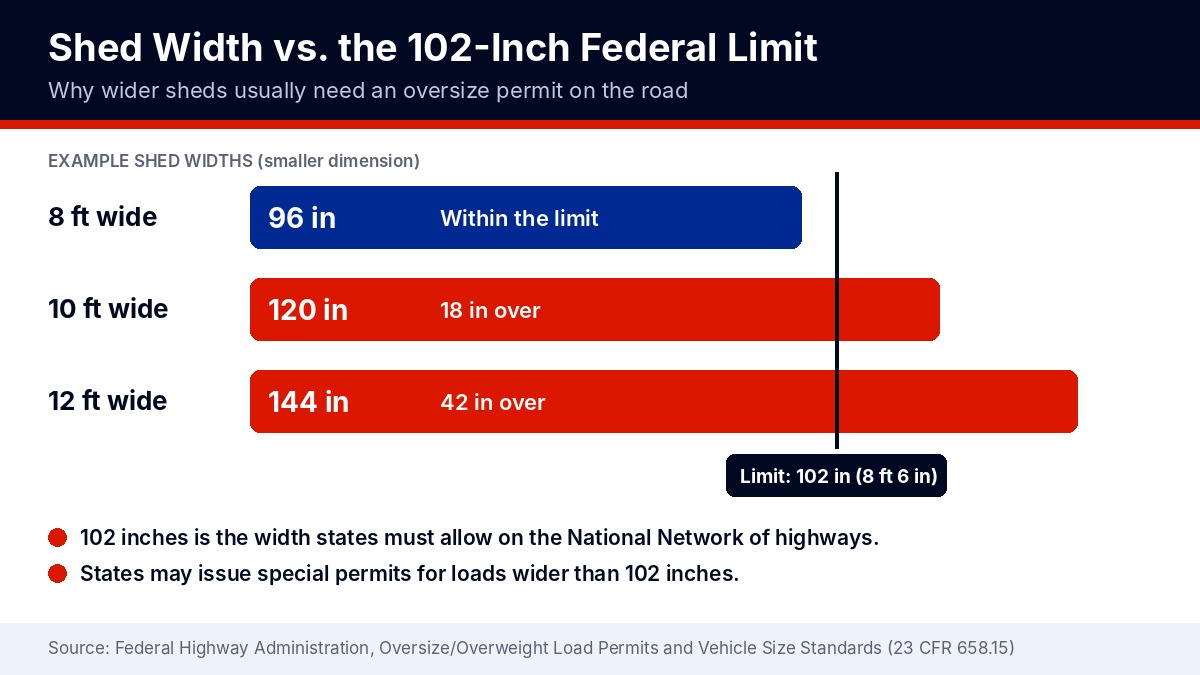
A shed whose smaller dimension is 8 feet or less is generally within the 102-inch federal width standard, while a 10-foot or 12-foot wide shed typically exceeds it and needs a special permit.
Source: Federal Highway Administration, Oversize/Overweight Load Permits and Vehicle Size Standards
Width and Height Limits
The Federal Highway Administration says states may not set a width limit other than 102 inches on the National Network, and that states may issue special permits for loads that exceed it. Height counts the shed and the trailer deck together, and the limit varies by state, commonly around 13 feet 6 inches to 14 feet.
Routes, Clearance, and Escorts
Overhead lines, low branches, bridges, tight turns, and narrow driveways matter more for a shed on a trailer than for a pickup. Wider loads may need flags, lights, or escort vehicles under the permit, so the route should be checked before the shed is lifted.
Do You Need a Permit to Move or Place a Shed?
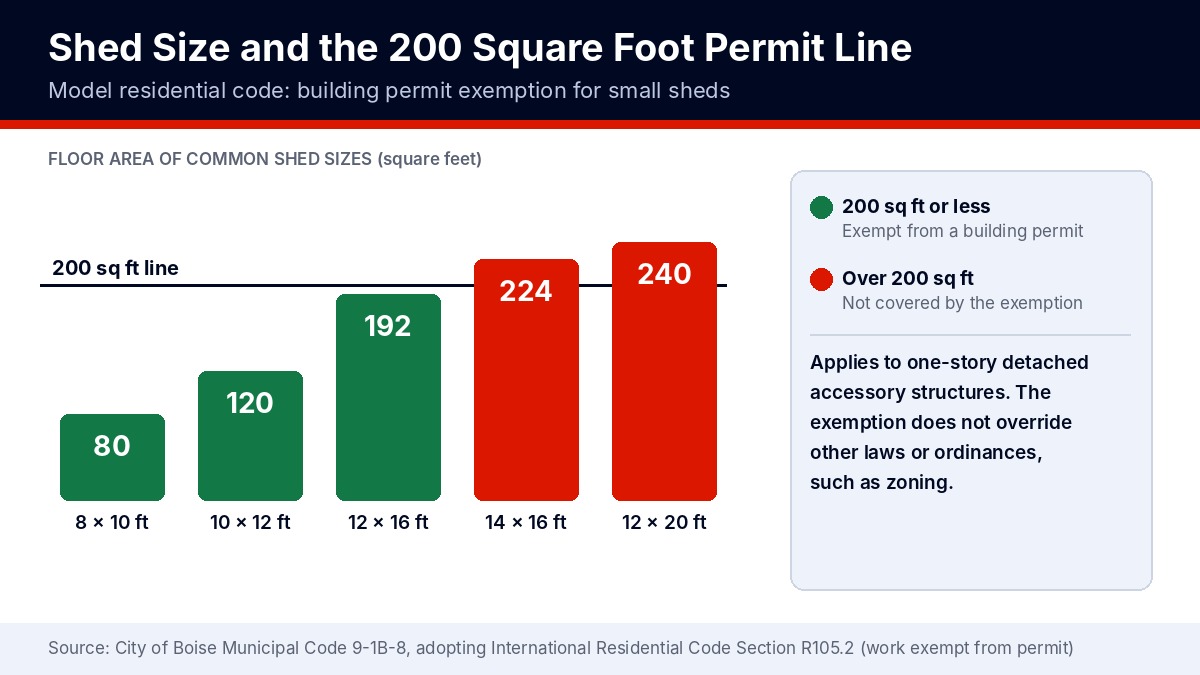
Many building codes exempt one-story detached sheds of 200 square feet or less from a building permit, but zoning, setbacks, and local amendments can still apply. Confirm the rules where the shed will sit, not where it comes from.
Source: City of Boise Municipal Code 9-1B-8, adopting International Residential Code Section R105.2
Building Permit Rules for Small Sheds
The model International Residential Code exempts one-story detached accessory structures from a building permit when the floor area is 200 square feet or less. Some jurisdictions set a lower threshold, such as 120 square feet, and electrical work may need its own permit even when the shed does not.
Zoning, Setbacks, and HOA Rules
A permit exemption does not override other laws or ordinances. Setbacks from property lines, spacing from other buildings, height limits, and homeowner association rules can all limit where a shed can be placed.
How Do You Prepare a Shed for Moving?
Empty the shed, clear the path, and have the new base ready. Good prep shortens the move and protects the structure.
Inside the Shed
- Remove tools, shelves, loose items, and anything heavy or fragile.
- Take down hanging items and wall-mounted racks.
- Latch doors and windows or secure them with tape or screws.
- Turn off and disconnect any electrical service using a licensed electrician.
Outside the Shed
- Release anchors, tie-downs, and any attachments to the ground.
- Clear fencing, shrubs, and low branches from the exit path.
- Check for soft ground, steep slopes, and underground lines near the route.
- Photograph the shed’s condition before it moves.
Prepare the New Site
The new location needs a level, well-drained base with room for the trailer to reach it. Compacted gravel, concrete blocks or piers, and a poured slab are common options, and the right one depends on the shed’s size and weight.
Can Barns, Garages, and Larger Outbuildings Be Moved?
Yes. Barns, garages, and workshops are too heavy for a standard shed trailer, so crews lift them with steel beams and hydraulic jacks and carry them on dollies or heavy carriers. Farms and ranches often need equipment moved at the same time, and the crew can arrange transport for tractors and other farm machinery alongside the building.
How Do Shed Movers Charge?
Shed moves are usually priced by size, weight, distance, and access, with a base price that covers a local radius and a per-mile charge beyond it. National cost guides commonly list professional shed moves at about $200 to $1,000, with an average near $500.
Typical Shed Moving Costs
These are national ranges for standard sheds. They are a planning baseline, not a quote, and heavier outbuildings are priced by the job.
| Cost item | Typical range |
|---|---|
| Professional shed move | About $200 to $1,000, average near $500 |
| Move to another spot on the same property | About $250 to $375 |
| Mileage past the base distance | About $1 to $3 per mile |
| Ramps or skids, when needed | Often $25 to $100 each |
| Barns, garages, and workshops | Priced per job based on size, weight, and access |
What Changes the Price
| Factor | Why it matters |
|---|---|
| Size and weight | Larger and heavier sheds need bigger trailers, more crew, and more lifting capacity |
| Construction | Wood, metal, and resin sheds, and those with lofts or heavy contents, handle differently |
| Access | Narrow gates, soft ground, slopes, and obstacles slow loading and unloading |
| Distance | Mileage beyond the base radius adds cost |
| Width | Sheds wider than 102 inches need a special permit and sometimes escorts |
| Base at the new site | Leveling, gravel, blocks, or a slab add labor and materials |
| Condition | Floor repairs or extra bracing can be needed before the shed will survive the move |
For a price tied to your shed or building, request a site-specific estimate with the size, photos, and both addresses.
Shed Movers Near Me: How to Choose the Right Crew
Pick a crew with the right trailer and lifting equipment for your shed’s size and weight, not just the lowest price. Associated Pacific Movers operates out of Boise, ID and moves structures across Idaho and Oregon, and the full range of specialized transport work shows the lifting and hauling experience behind every move.
Questions to Ask Shed Movers Before You Hire
- What size and weight of shed can you move?
- What trailer or lifting equipment will you use?
- Do you handle oversize permits and escorts for wide sheds?
- Is the estimate a flat price or priced by distance?
- What happens if the shed is damaged during the move?
- Can you level the shed and set it on the new base?
- What insurance and licensing do you carry?
Red Flags in a Shed Moving Quote
- A firm price without photos, dimensions, or an access check
- No mention of width, height, or permit limits
- Unclear insurance or licensing
- No plan for tight access or soft ground
- No explanation of what is included at the new site
Frequently Asked Questions About Shed Movers
How much does it cost to move a shed?
National cost guides commonly put professional shed moves at about $200 to $1,000, with an average near $500. Moving a shed to another spot on the same property often runs closer to $250 to $375, and extra mileage past the base distance is often $1 to $3 per mile.
Can a shed be moved with items inside?
No. Tools, shelves, and stored items should come out first because contents shift, add weight, and can damage the floor and walls during lifting. Securing doors and loose trim is the only prep that should stay inside.
Do you need a permit to move a shed?
Moving a shed on public roads can need an oversize permit if the load is wider than 102 inches, and placing it may need a building permit or zoning approval. Many codes exempt one-story sheds of 200 square feet or less from a building permit, but local limits vary.
How wide can a shed be to travel without an oversize permit?
The federal width standard is 102 inches, or 8 feet 6 inches. A shed 8 feet wide in its smaller dimension is within that limit, while a 10-foot or 12-foot wide shed typically exceeds it and needs a special permit.
Can any shed be moved?
Not every shed. A solid floor frame or skids and sound walls make a move practical, while rotted floors, rusted frames, or heavy damage can make a shed fall apart when lifted. A mover should inspect the shed before quoting.
How long does it take to move a shed?
A standard shed with clear access can often be loaded, hauled, and set in a few hours. Heavier buildings, tight access, longer routes, and ground preparation at the new site add time.
Should I move my shed or replace it?
Compare the moving quote against the cost of a comparable new shed. Moving usually makes sense for a well-built, custom, or heavy shed in good condition, while replacing can win for a worn, lightweight shed.
Does a shed need a foundation at the new location?
It needs a level, well-drained base. Common options include compacted gravel, concrete blocks or piers, and a concrete slab, and the right choice depends on the shed’s size, weight, and local code.
Can barns, garages, and workshops be moved too?
Yes, in many cases. Larger outbuildings are moved with steel beams, hydraulic jacks, and dollies or heavy carriers instead of a standard shed trailer, and they need more planning for route, permits, and foundation.
Ready to Move Your Shed?
Send the shed’s dimensions, construction type, photos, access details, and both addresses, and the crew can outline the equipment, permits, and schedule your move will need.