
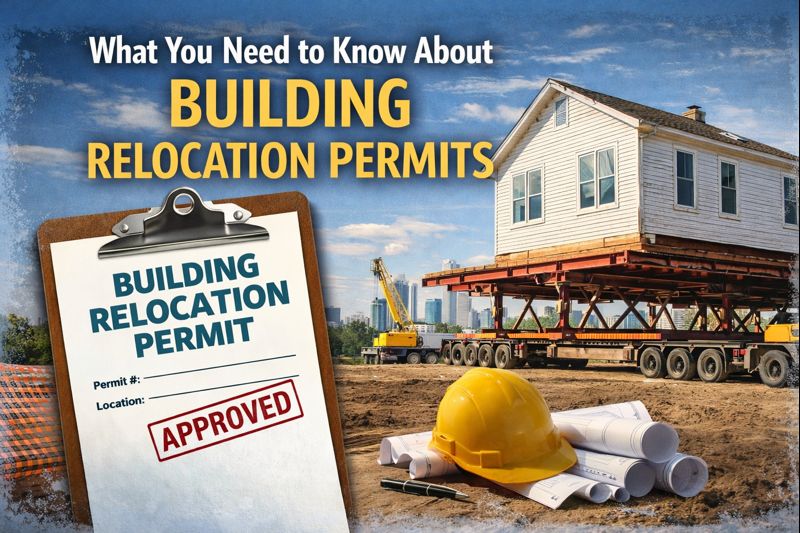
Building relocation permits in Idaho are one of the most important parts of any successful structure move. Before a house, commercial building, modular section, or specialty structure can be transported, property owners usually need to address permit approvals, route restrictions, destination-site requirements, utility coordination, and safety documentation. Every move is different, but the common thread is clear: the larger and more complex the structure, the more important it is to plan ahead, confirm the exact approvals required, and work with a company that understands how to move structures legally and safely across Idaho. If you are preparing for a project and want help early in the process, you can start with Associated Pacific Movers or contact the team here to discuss the scope of your move.
What building relocation permits in Idaho usually include
There is not always one single approval that covers every part of a structure move. In many cases, a building relocation involves multiple permit categories depending on where the structure is starting, where it is going, the roads it will travel on, and whether utility lines, public streets, or destination-site improvements are involved. A move may require approvals from state transportation agencies, local jurisdictions, utility providers, and destination-site authorities before transport can begin.
That is why permit planning should start before final scheduling, not after. Owners and contractors often assume the biggest challenge is physically moving the building, when the real delays often come from route approval, clearance conflicts, missing site documentation, or local restrictions that were not addressed soon enough. The best approach is to treat permits, site access, and transport prep as one coordinated process rather than separate tasks handled at the last minute.
Why building relocation permits in Idaho vary from one move to another
Permit requirements change based on the structure type, dimensions, route, municipality, utility conditions, and delivery site. A smaller structure moving a short distance within one jurisdiction may be far simpler than a larger building crossing multiple road authorities. A project involving a raised home, rural road access, narrow urban turns, or overhead utility conflicts usually requires more review than a straightforward relocation on an open route.
If the move overlaps with structural preparation, the permit conversation often ties directly into lifting and loading work. That is especially true for buildings that need elevation, stabilization, or temporary support before transport. In those cases, it helps to review related services such as building raising and house lifting services and home and building moving services in Boise to understand how prep work and permit timing often move together.
State transportation permits and overlegal movement approvals
When a building or structure exceeds normal legal roadway limits, transportation approvals become a major part of the process. Idaho Transportation Department resources explain that special commercial motor vehicle permits are used for overlegal movement on the state highway system, and that state-issued special permit authority applies to state highways rather than automatically covering county roads or city streets. That means a building move may need separate coordination beyond the state portion of the route. :contentReference[oaicite:1]{index=1}
This matters because many relocations involve more than one kind of roadway. A structure may begin on a local street, enter a state route for a portion of the haul, and then leave that system again near the delivery point. If the transport crew only plans for one segment of that movement, the project can stall. A qualified mover will look at the entire route, not just the longest stretch of road.
Transportation-related approvals often involve:
- Oversize or overlegal movement permits for applicable state-highway travel
- Route review for bridge limits, clearance points, and operational restrictions
- Timing controls based on traffic, weather, or roadway conditions
- Escort or pilot-vehicle requirements when dimensions trigger additional safety measures
- Load details such as dimensions, weight distribution, and trailer setup
For clients who are also reviewing overlegal hauling concerns more broadly, this topic pairs naturally with what oversized load transport in Idaho really requires and with professional heavy equipment hauling in Idaho when the project involves machinery, commercial freight, or support equipment in addition to the structure itself.
Local permits, street use approvals, and municipal conditions
Local approvals can be just as important as state permits. Depending on the city, county, or highway district involved, a structure move may require permission for temporary street use, lane occupation, traffic control, police support, or movement through local intersections and neighborhood approaches. Some jurisdictions may ask for a detailed route map, proof of insurance, dimensions, origin and destination addresses, and confirmation that utilities have been notified where necessary.
Local review is where many projects become more specific. A city may set travel-hour restrictions, require notice before the move, or limit work near school zones, downtown corridors, or busy intersections. County or district rules can differ as well, especially where narrower roads, shoulders, culverts, or limited turning space affect the move. That is why every structure move should be reviewed route-by-route instead of assuming the same permit package works everywhere.
Questions local officials often want answered
- What are the exact dimensions and estimated weight of the building?
- Where will the move begin and end?
- Which roads, intersections, and access points will be used?
- Will signs, traffic devices, or overhead lines need temporary adjustment?
- What day and time is the move proposed?
- Who is handling traffic control and on-site coordination?
Zoning, destination-site approvals, and land-use checks
One of the most overlooked parts of a building move is the destination site. A structure can be fully approved for transport and still be delayed if the receiving property is not ready or does not meet local use requirements. Before a move is finalized, owners should confirm whether the destination parcel is properly zoned, whether setbacks and access points are acceptable, and whether foundation work, utility hookups, or site grading need approval first.
This is especially important when moving a historic home, agricultural structure, modular section, or commercial building onto a site that may require inspections or placement review. Land-use and site-readiness issues do not always look dramatic on paper, but they can delay a move just as easily as a missing transport permit. A realistic project timeline accounts for both the road move and the receiving-site conditions.
| Permit area | What it affects | Why it matters |
|---|---|---|
| State transport approval | Overlegal movement on state highways | Controls how and when the structure may travel |
| Local street or route approval | City streets, county roads, and district access | Prevents local route conflicts and access issues |
| Utility coordination | Overhead lines, signals, and service obstacles | Reduces delay and safety risk during movement |
| Destination-site review | Placement, zoning, and property readiness | Ensures the structure can be delivered and set properly |
Utility coordination is often part of the permit process
Building moves often require coordination with utility providers, especially when the structure height or route creates conflicts with overhead lines, traffic signals, communications lines, or service hardware near streets and intersections. This does not mean every line has to be removed. In some cases, routes are chosen specifically to reduce utility interference. In others, temporary adjustments or scheduled assistance may be needed.
Utility planning is one of the clearest examples of why permit and route work should happen early. If the haul date is set before utility coordination is confirmed, one unresolved overhead issue can disrupt the whole schedule. For larger structures or taller loads, this step is not optional. It is part of moving responsibly and safely.
Utility-related items to confirm in advance
- Low overhead lines near the pickup point
- Signalized intersections along the route
- Tree limbs or signage affecting structure height
- Temporary line lifts or removals, if required
- Contact windows and scheduling with providers
Insurance, documentation, and compliance checks
Permit approval is often tied to documentation. Depending on the move, agencies or counterparties may ask for proof of insurance, route information, dimension details, ownership records, structural assessments, and confirmation that the proposed movement meets applicable safety conditions. Idaho overlegal operations guidance emphasizes conditions intended to protect the highway system and traveling public during movement of overlegal vehicles and loads. :contentReference[oaicite:2]{index=2}
That means documentation should be prepared accurately and kept consistent across applications, route requests, and move planning. If one document lists different dimensions than another, or if the route description is incomplete, processing delays are much more likely. The same goes for insurance certificates that do not match the project scope or list outdated information.
Building relocation permits in Idaho are easier to manage with complete project details
The more accurate the project file is from the start, the smoother the approval process usually becomes. Good permit packages are built on real dimensions, real site conditions, real route knowledge, and a realistic delivery plan. Guesswork tends to create revisions, and revisions cost time. Clients can make the process easier by providing current photos, known obstacles, parcel information, and a clear explanation of the structure type and destination plan.
Helpful documents to gather early
- Current structure dimensions and estimated weight
- Photos of the building from multiple sides
- Photos of origin access and destination access
- Parcel information for the receiving site
- Known utility or clearance concerns
- Any engineering or structural reports already available
- Preferred timing and project deadlines
Common mistakes that delay structure-move approvals
Delays usually happen because something was assumed rather than confirmed. One of the most common mistakes is believing a transport permit automatically solves every other approval issue. In reality, transportation, local routing, destination placement, and utility coordination often move on parallel tracks. If one of those tracks falls behind, the whole project can stall.
Another common mistake is underestimating site access. A structure may be fully approved for the road portion of the move but still face a problem at the final approach if gate widths, soft ground, turning space, or foundation readiness were not reviewed. That is one reason related topics like how structure lifting specialists prevent foundation damage and when to hire foundation raising contractors in Idaho matter in the real world. Transport, lifting, foundation preparation, and final placement are often connected parts of the same project.
Frequent approval problems include:
- Submitting incomplete or inconsistent dimensions
- Failing to check all jurisdictions on the route
- Assuming local road use is covered by a state permit
- Overlooking destination-site requirements
- Waiting too long to coordinate with utility providers
- Scheduling the move before approvals are actually finalized
What to ask before hiring a building mover
A capable building mover should be able to speak clearly about permit coordination, routing, site access, insurance, utility issues, and structural prep. Even when the owner is involved in part of the permit process, the mover should still understand the practical requirements that affect timing and execution. Experience matters because building moves rarely stay simple from start to finish.
It also helps to look at the company’s wider services to see whether they handle the related work that often overlaps with relocation projects. Associated Pacific Movers also provides mobile home moving services and other specialized transport support through its full services lineup, which is useful when a project involves multiple structure types or transport needs.
Useful hiring questions
- Have you moved structures like mine before?
- Which approvals are likely to apply to this route and destination?
- Will you help review route restrictions and utility conflicts?
- What site-readiness issues should be handled before scheduling?
- What delays are most common on projects like this?
- How do you handle changes if route conditions or approvals shift?
Helpful related reading before a structure move
Some clients researching permits are also comparing timelines, damage prevention, lifting, or cost expectations before they make a decision. If that sounds familiar, these related topics can help round out the picture: how structural relocation contractors move entire homes, what affects the price on a building relocation cost estimator, and the ultimate guide to manufactured home transport in Idaho.
For official state transportation guidance, you can review the Idaho Transportation Department permit guide.
Frequently asked questions about building relocation permits in Idaho
Do I need more than one permit to move a building in Idaho?
Often, yes. A structure move may involve transportation approvals, local route permissions, utility coordination, and destination-site requirements depending on the route and the type of building being moved.
Does a state permit cover city streets and county roads too?
No. Idaho Transportation Department special permit authority applies to state highways, so local streets or county roads may require separate approvals depending on the route. :contentReference[oaicite:3]{index=3}
How early should permit planning begin for a building move?
As early as possible. Larger and more complicated moves usually need more time for route review, utility coordination, local approvals, and destination-site preparation.
Can utility lines affect whether a structure can be moved?
Yes. Overhead lines, signals, signs, and other route obstacles can change the route, delay the move, or require coordination before transport can proceed.
What documents help speed up permit approval?
Accurate dimensions, site photos, destination information, route details, and any engineering or structural documentation already available can all help reduce preventable delays.
What happens if a permit issue is missed before moving day?
Missed approvals can cause delays, rescheduling, extra costs, or a full stop to the move until the requirement is addressed. That is why early confirmation matters.
Talk with an Idaho building moving company about permits and planning
When you are preparing to move a structure, clear permit planning can save time, reduce surprises, and help the move stay on track. Associated Pacific Movers works with property owners, contractors, and commercial clients across Idaho on building relocation, lifting, hauling, and specialized transport projects. If you want help reviewing the move, understanding likely approval steps, or planning the next phase, visit the contact page or return to the homepage to learn more.