
Structure lifting specialists play a critical role in preserving the integrity of buildings during lifting, raising, or relocation projects. These professionals combine advanced engineering principles, precision equipment, and methodical planning to ensure structures are elevated safely without cracking foundations or compromising load-bearing components. Whether the goal is to mitigate flood risk, repair a failing foundation, or relocate an entire building, the process demands expertise that goes far beyond simple lifting. Understanding how structure lifting specialists prevent foundation damage helps property owners appreciate the value of professional services and the careful science behind every successful lift.
What Structure Lifting Specialists Do
Structure lifting specialists are responsible for safely elevating buildings while maintaining structural stability at every stage of the process. Their work begins long before any equipment is placed beneath a structure. Specialists evaluate the building’s size, age, materials, and existing foundation conditions to determine the safest lifting strategy. This includes identifying load paths, weight distribution, and potential weak points that could be stressed during elevation.
Their responsibilities typically include:
- Conducting structural assessments and engineering reviews
- Designing a customized lifting plan based on building specifications
- Selecting and calibrating lifting equipment for uniform load transfer
- Monitoring movement in real time to prevent uneven stress
- Coordinating foundation repair, replacement, or relocation logistics
The goal is not just to lift a structure, but to do so in a controlled, incremental manner that protects both the building and the foundation. By relying on engineering calculations rather than guesswork, specialists minimize the risk of cracking, shifting, or long-term structural damage.
Structure Relocation Services for Raising and Securing Buildings
Structure relocation services involve much more than simply moving a building from one place to another. When raising or securing buildings, specialists must ensure that every lift is evenly distributed and precisely controlled. This is especially important when a structure is being elevated to install a new foundation, improve flood resilience, or prepare for transportation.
Relocation services often include:
- Temporary support systems to stabilize the structure during lifting
- Gradual elevation in small increments to reduce stress
- Reinforcement of structural components when necessary
- Continuous alignment checks to keep the building level
- Secure placement onto new foundations or transport systems
By raising structures slowly and uniformly, professionals reduce the likelihood of foundation cracking or structural distortion. The process allows engineers to pause, inspect, and adjust as needed, ensuring the building remains stable throughout the project. This level of control is what separates professional structure relocation services from risky, improvised lifting methods.
How Professionals Prevent Structural Damage
Preventing structural damage during lifting is a combination of preparation, precision, and ongoing monitoring. Professionals approach each project with a clear understanding that even minor miscalculations can lead to serious issues such as foundation fractures or wall separation. As a result, every step is designed to reduce stress concentrations and maintain balance.
Key strategies include:
- Even load distribution across multiple lifting points
- Incremental lifting to avoid sudden shifts in weight
- Reinforcement of vulnerable areas before lifting begins
- Continuous measurement of elevation and alignment
- Immediate correction of any irregular movement
By treating lifting as a controlled engineering operation rather than a mechanical task, professionals significantly reduce the risk of damage. This approach ensures that the foundation and structure work together rather than against each other during elevation.
Tools and Hydraulic Systems Used
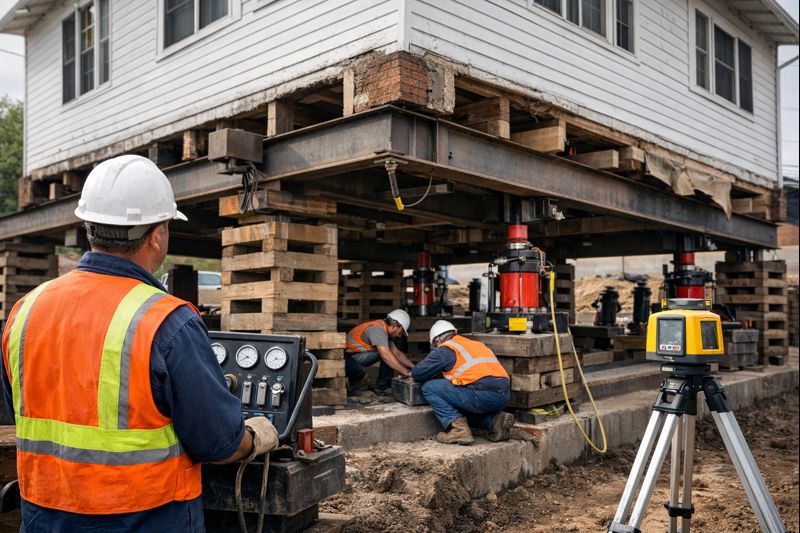
Modern structure lifting relies heavily on advanced tools and hydraulic systems designed for precision and safety. Hydraulic jacks are the cornerstone of most lifting projects because they provide smooth, controlled force that can be adjusted in extremely small increments. These systems are often synchronized to ensure that all lifting points move at the same rate.
Common tools and systems include:
- Unified hydraulic jack systems for synchronized lifting
- Steel beams and cribbing to distribute weight evenly
- Load monitoring sensors to track pressure and movement
- Laser leveling equipment to maintain alignment
- Custom-engineered supports for unique structures
These tools allow specialists to lift massive structures while maintaining exact control over movement. By monitoring pressure and elevation in real time, professionals can identify potential issues before they result in foundation damage. The result is a safer lift and a more stable final placement.
Safety Inspections Before Lifting
Safety inspections are a critical step in preventing foundation damage. Before any lifting begins, specialists conduct thorough inspections to identify existing weaknesses or conditions that could be exacerbated during elevation. This includes examining the foundation, framing, and connections between structural elements.
Inspections typically focus on:
- Existing cracks or settlement in the foundation
- Condition of load-bearing walls and beams
- Soil stability beneath and around the foundation
- Presence of moisture damage or rot
- Compatibility of the structure with lifting equipment
By addressing these issues in advance, professionals can reinforce or repair vulnerable areas before lifting begins. This proactive approach significantly reduces the likelihood of unexpected failures and ensures the structure responds predictably to lifting forces.
Common Issues During the Lifting Process
Even with careful planning, structure lifting can present challenges that require expert intervention. Common issues include uneven settling, shifting loads, or unexpected resistance from older materials. Professionals are trained to recognize these problems early and adjust their approach to prevent damage.
Typical challenges include:
- Differential lifting where one side rises faster than another
- Hidden structural weaknesses revealed during elevation
- Soil movement affecting temporary supports
- Weather conditions impacting stability
- Aging materials that respond unpredictably to stress
When these issues arise, specialists pause the lifting process and make necessary adjustments. This may involve redistributing load points, reinforcing supports, or modifying the lifting sequence. The ability to respond quickly and effectively is essential to preventing foundation cracking or structural compromise.
The Importance of Experience and Engineering Expertise
Experience is one of the most valuable assets structure lifting specialists bring to a project. Each building presents unique challenges, and seasoned professionals draw on past projects to anticipate potential risks. Engineering expertise ensures that lifting plans are grounded in proven principles rather than assumptions.
Experienced teams understand how different materials behave under stress, how soil conditions affect stability, and how to adapt equipment configurations to suit specific structures. This knowledge allows them to make informed decisions that protect both the building and its foundation throughout the lifting process.
Why Professional Structure Lifting Matters
Attempting to lift or raise a structure without professional guidance can lead to serious consequences. Improper equipment, uneven lifting, or inadequate planning can result in cracked foundations, warped framing, or even total structural failure. Professional structure lifting specialists mitigate these risks by applying engineering precision, advanced tools, and systematic oversight.
For property owners, this means peace of mind knowing that their investment is protected. A professionally lifted structure is more likely to retain its value, meet safety standards, and perform as intended for decades to come.
Trust Associated Pacific Movers, Inc. for Expert Structure Lifting
When it comes to building raising, house lifting, or structure relocation, choosing an experienced provider is essential. Associated Pacific Movers, Inc. is the premier Boise, ID moving company trusted for complex lifting and transportation projects. When you need a building relocated or a large object transported in Boise, ID, or anywhere in the state, Associated Pacific Movers is the company to call. For over 40 years, we have provided private and commercial clients with outstanding moving services for everything from commercial and heavy equipment to homes and mobile homes, along with building raising and house lifting. Contact us today for your next move and experience the confidence that comes with proven expertise and professional care.