


Manufactured home transport is a specialized oversize-load operation, not a household move. The home travels on its own steel chassis with temporary axles and tires, usually needs a permit, and often needs escort vehicles, so cost and timing depend on far more than mileage.
Whether you own a single-wide or a multi-section home, knowing the process ahead of time helps you avoid delays and surprise bills. Associated Pacific Movers has moved homes and structures since 1973, and the steps below match what crews evaluate before a home leaves its site. Owners looking for experienced help can start with specialists who relocate manufactured and mobile homes.
How Does Manufactured Home Transport Work?
Manufactured home transport follows six stages: a pre-move inspection, permits and route approval, utility disconnection and prep, lifting onto transport axles, escorted hauling, and setup at the new site with leveling, anchoring, and reconnection.
Each stage has to finish before the next can start. A missing permit holds up the haul, and a site that is not ready holds up setup, so planning the full sequence before moving day is what keeps a move on schedule.
Can Your Manufactured Home Be Moved?
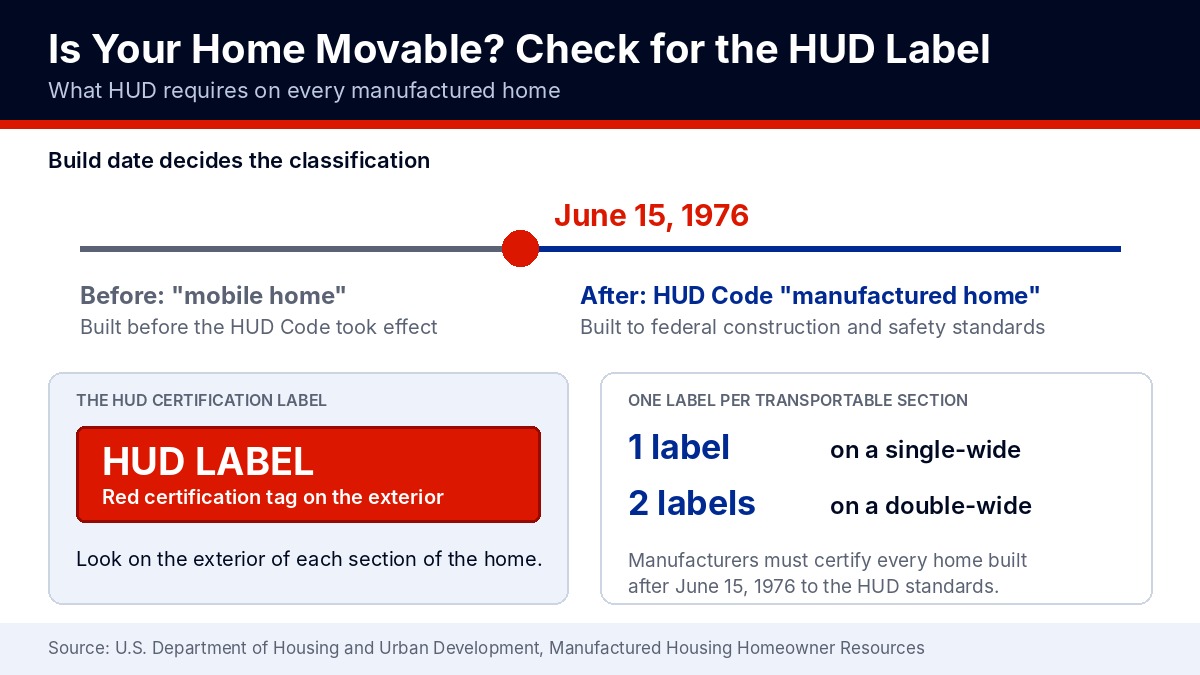
Most homes built after June 15, 1976 can be moved when the chassis and structure are sound and the route and destination allow it. That date is when the federal HUD Code took effect and when every manufactured home began carrying a certification label.
Source: U.S. Department of Housing and Urban Development
How to Confirm Your Home Meets the HUD Code
Look for a red HUD certification label on the exterior of each transportable section. A single-wide has one label and a double-wide has two. The home should also have a data plate inside, often found in a kitchen cabinet, utility room, or master bedroom closet.
If a label is missing, HUD’s monitoring contractor, IBTS, can verify homes built from June 15, 1976 forward and provide replacement labels or a verification letter. Lenders, insurers, and some destination communities often ask for this documentation, so locate it before you request quotes.
Moving a Home Built Before 1976
Homes built before June 15, 1976 are classed as mobile homes, carry no HUD label, and cannot be verified through IBTS. They can sometimes still be moved, but many parks, counties, and lenders restrict where they can be placed, so confirm the destination accepts the home before you pay for transport.
What a Mover Checks Before Quoting
A reliable quote starts with an inspection. These are the items a mover evaluates and why each one matters.
| Check | What is evaluated | Why it matters |
|---|---|---|
| Build date and labels | HUD label on each section, data plate inside | Confirms a HUD Code home that most destinations accept |
| Chassis | Frame, welds, cross-members, hitch points | The chassis carries the home on the road, and damage can make a move unsafe or impractical |
| Structure | Roof, floors, walls, prior water damage | Weak framing can flex or break in transit |
| Dimensions | Length, width, height, estimated weight | Sets the permit class, escort count, and equipment |
| Origin access | Gates, trees, slopes, soft ground, overhead lines | Decides how the home gets out |
| Route | Bridges, overpasses, tight turns, utility lines, construction | A route that fits a truck may not fit a home |
| Destination | Zoning, park or community rules, site readiness | A home cannot be set where it is not allowed |
Single-Wide vs. Double-Wide Manufactured Home Transport
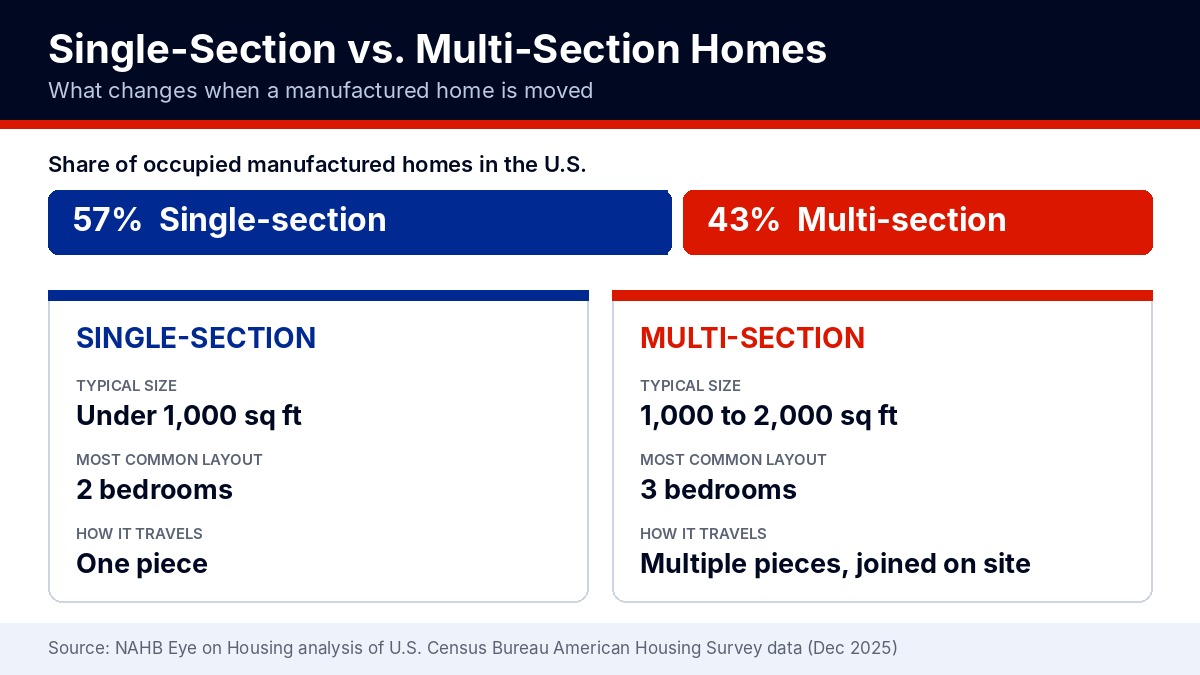
A single-wide travels as one section, while a double-wide is split and hauled as two or more separate loads. Roughly 57% of occupied manufactured homes are single-section and 43% are multi-section, based on NAHB’s analysis of American Housing Survey data.
Source: NAHB Eye on Housing analysis of U.S. Census Bureau American Housing Survey data
| Transport factor | Single-wide | Double-wide or larger |
|---|---|---|
| Sections hauled | One | Two or more |
| Loads on the road | Usually one main load | One load per section |
| HUD labels | One | One per section |
| Permits | Typically one | Typically one per section, varies by state |
| Typical size | Under 1,000 sq ft | 1,000 to 2,000 sq ft |
| Work at the new site | Leveling, anchoring, hookups | Same work plus aligning, joining, and sealing sections |
| Relative cost | Lower | Higher |
Moving a Single-Wide Manufactured Home
A single-wide usually moves as one load, which keeps permits, labor, and setup simpler. Width, height, weight, and chassis condition still decide the equipment and escorts. Confirm these before booking:
- Windows, doors, and roof edges are secure and free of loose material.
- Bridge, overpass, and utility-line clearances along the route.
- Turning space and firm ground at both the origin and destination.
- Whether the route needs pilot or escort vehicles.
Moving a Double-Wide or Larger Home
A double-wide is separated at the marriage line, and each half is prepared, permitted, and hauled on its own. At the new site the sections are aligned, joined, and sealed before utilities go back on. Homes that do not fit the standard configuration, such as additions or unusual structures, may call for structural moving for non-standard homes.
What Permits and Escorts Does a Manufactured Home Move Require?
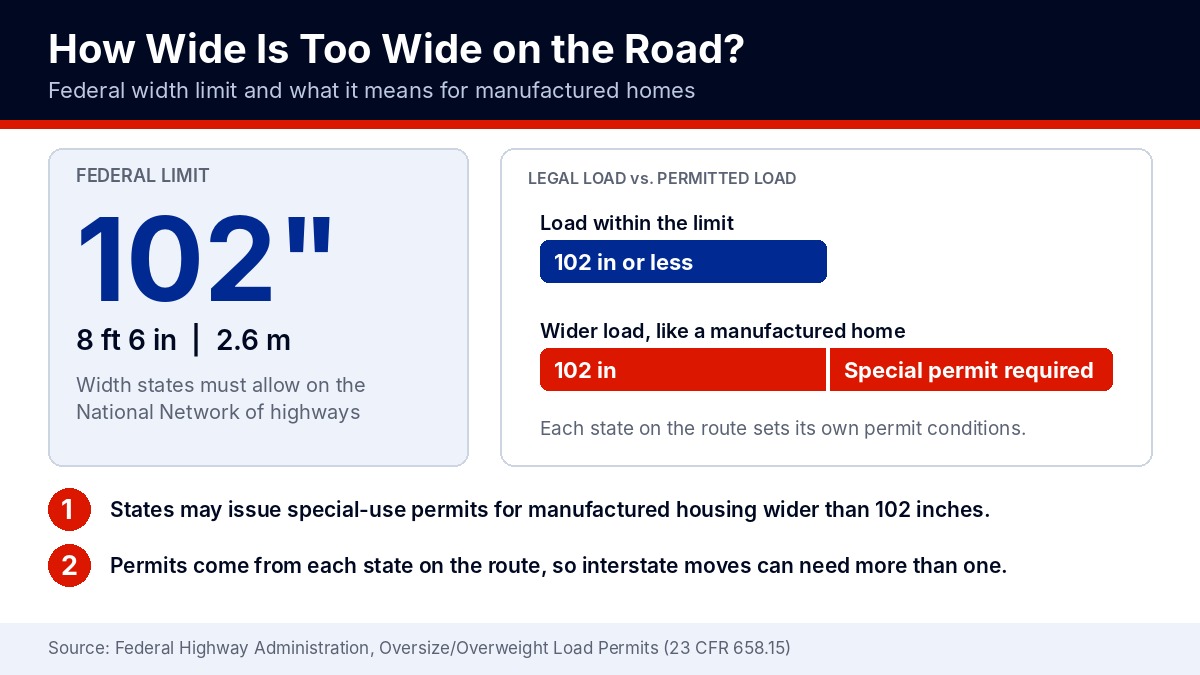
Almost every manufactured home exceeds the 102-inch federal width standard, so the move needs an oversize permit from each state on the route and often pilot or escort vehicles.
Source: Federal Highway Administration, Oversize/Overweight Load Permits
Common Permit and Escort Conditions
The Federal Highway Administration notes that states may grant special permits for manufactured housing wider than 102 inches. Each state then writes its own conditions. A permit can set any of the following:
- The approved route and the roads that are off limits
- Travel days and hours, including daylight-only restrictions
- Pilot or escort vehicle counts, which often rise with width and length
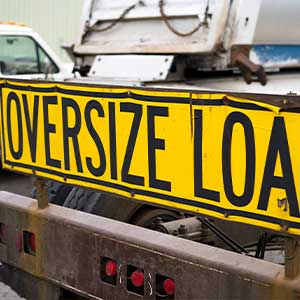
- Warning signs, flags, and lights on the load and escorts
- Detours around construction, closures, and bridge restrictions
Why Route Surveys Matter
A route that works for an ordinary truck may not work for a home. Bridges, railroad crossings, low wires, tight intersections, steep grades, and construction zones all affect the path, and the clearances must account for the home and the transport rig together. A survey before moving day prevents a load from stopping at an obstacle it cannot pass.
Interstate Moves
Crossing a state line adds a permit, and sometimes a different set of escort and travel-time rules, for each state on the route. Interstate moves also run longer and cost more per load, so the permit chain should be mapped before a date is set.
How Do You Prepare a Manufactured Home for Transport?
Remove or secure everything that can shift, detach everything that cannot travel with the home, and clear the exit path. Preparation protects the structure and prevents moving-day delays.
Inside the Home
- Remove loose belongings, fragile items, and heavy freestanding contents.
- Secure cabinet doors, drawers, and built-in components.
- Confirm every window and exterior door latches tight.
- Take down items that vibration could loosen, such as wall hangings and ceiling fixtures.
Outside the Home
- Remove skirting, porches, steps, decks, awnings, and additions that cannot travel.
- Inspect roof edges and siding for loose material.
- Clear fences, vehicles, shrubs, and other obstacles from the exit path.
- Leave enough room for lifting and positioning equipment.
Utilities and Destination Site
Electrical, water, sewer, gas, HVAC, and communication lines should be disconnected by qualified professionals. The destination needs to be ready before the home arrives, with access for the rig, a prepared foundation or pier layout, and utility stubs in place.
What Happens on Moving Day?
Moving day runs in a fixed order, from lifting the home to placing it on the new site.
- Inspect and measure: The mover evaluates the home, chassis, origin access, route, and destination, then records the dimensions that set permit and equipment needs.
- Secure permits and approve the route: Oversize permits are obtained for each section and each state on the route, and escort needs and travel windows are confirmed.
- Disconnect and prepare the home: Qualified professionals disconnect utilities, exterior attachments are removed, and doors, windows, and cabinets are secured.
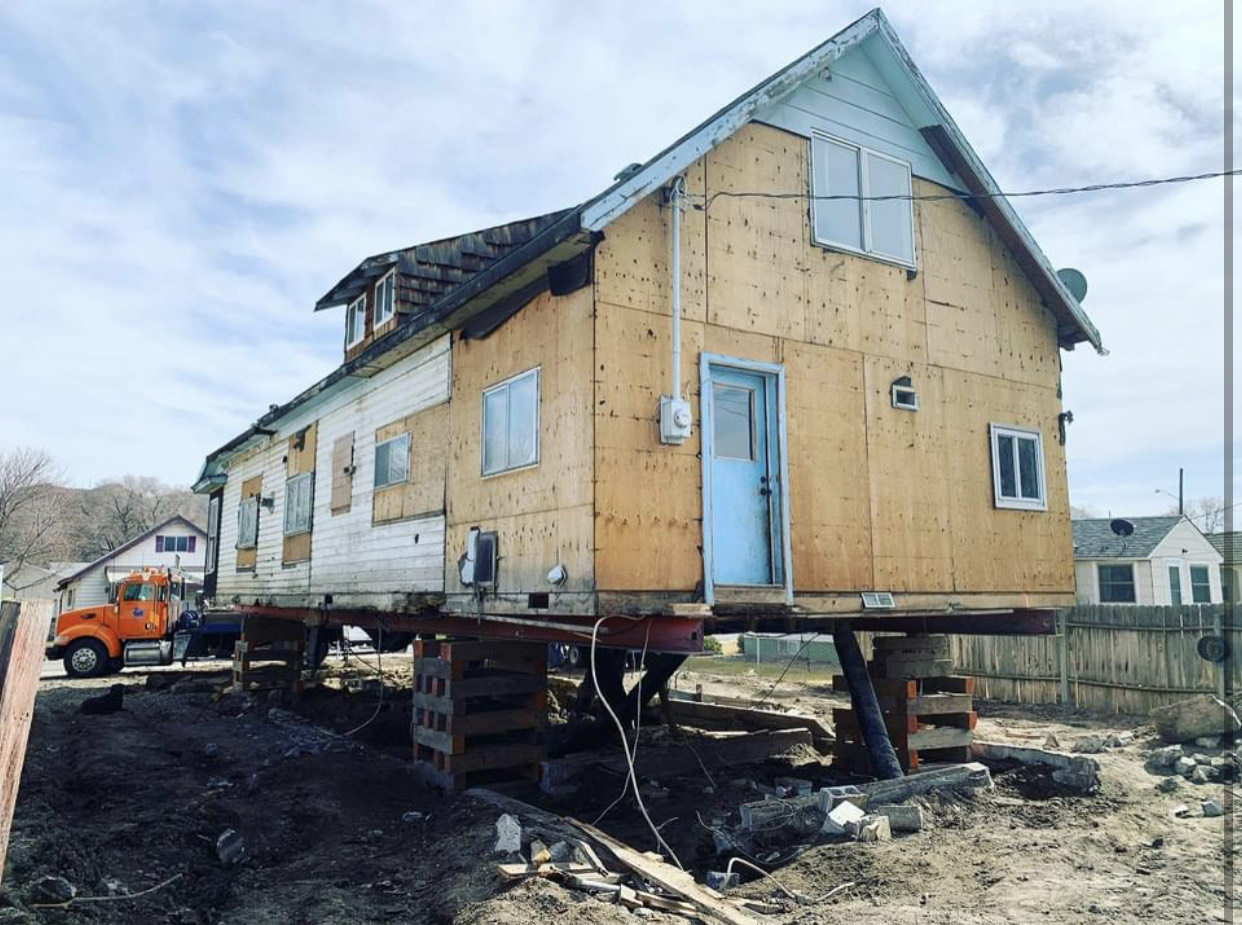
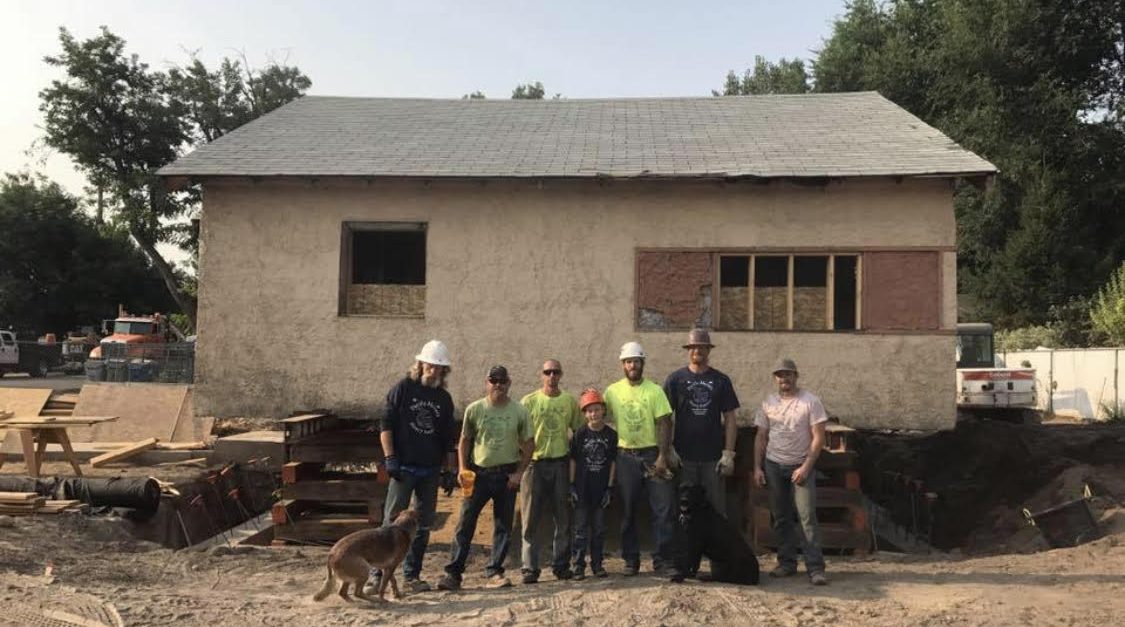
- Lift and fit transport axles: The home is raised on hydraulic jacks, transport axles, tires, and a hitch assembly are fitted, and the home is leveled for travel.
- Haul under escort: The home travels the approved route with required pilot or escort vehicles, warning signs, flags, and lights.
- Place and set up: The home is positioned on the prepared site, then leveled, blocked, anchored, joined if multi-section, and reconnected to utilities.
Many homes no longer have axles, tires, or a hitch after the original setup, so the mover fits a transport set before the home can roll. That is one reason a manufactured home move needs specialized equipment and not a standard tow vehicle.
What Equipment Is Used to Move a Manufactured Home?
The equipment list depends on the home, but the goal is always control and stability during lifting, hauling, and placement.
| Equipment | Job |
|---|---|
| Transport axles, wheels, and tires | Carry the home on the road when it has no running gear of its own |
| Hitch or tongue assembly | Connects the home to the tow vehicle |
| Heavy-duty tow tractor | Pulls the home at the weight and width of the load |
| Hydraulic jacks and cribbing | Raise the home and support it safely while axles are fitted |
| Load securement | Straps and fasteners that keep the structure stable in transit |
| Pilot and escort vehicles | Warn traffic and scout the route when the permit requires them |
Some sites also need cranes, loaders, or other machinery for placement. Crews can arrange transport for the lifting gear and machinery as part of the overall plan.
What Does Manufactured Home Transport Cost?
Local single-wide moves commonly run about $5,000 to $8,000 and double-wide moves about $10,000 to $13,000, before destination setup. Your quote can land well above or below those figures depending on the factors below.
Typical Manufactured Home Transport Costs by Home Size
These are national ranges published by consumer cost guides for moves of about 50 miles or less. They are a planning baseline, not a quote.
| Cost item | Typical range |
|---|---|
| Single-wide, local move | $5,000 to $8,000 |
| Double-wide, local move | $10,000 to $13,000 |
| Setup at the destination | Add roughly $3,000 to $4,000 |
| Hauling rate by distance | About $4 to $7 per mile for the tow vehicle |
| Escort vehicles, when required | About $1.50 to $3.50 per mile per vehicle |
What Changes the Price
| Factor | Why it affects cost |
|---|---|
| Home size and sections | Wider, longer, or multi-section homes need more equipment, labor, and loads |
| Distance | More miles add fuel, driving time, and scheduling |
| Permits and escorts | Each section and each state can add permit fees and escort vehicles |
| Condition of the home | Older or damaged structures need extra prep and reinforcement |
| Origin and destination access | Soft ground, slopes, tight gates, and overhead lines slow extraction and placement |
| Exterior attachments | Porches, decks, steps, awnings, and skirting need separate handling |
| Setup scope | Leveling, anchoring, section joining, and utility work add labor |
Costs Outside the Move Itself
Budget separately for a foundation or pier layout, anchoring, utility hookups, skirting and steps, and any local inspection fees. A per-mile price alone can mislead, because two homes moving the same distance can need very different amounts of labor and equipment. To get a number tied to your home, request a site-specific estimate with the dimensions, build date, and both addresses.
What Happens After the Home Is Delivered?
After delivery the home is leveled, supported, anchored, joined if it has more than one section, and reconnected to utilities. Setup is a separate scope from hauling, so confirm who handles each part.
Leveling, Support, and Anchoring
The crew positions the home over piers or a foundation, levels it, and anchors it to resist wind and uplift. Local codes and the home’s installation instructions set the requirements, and a building department may inspect the work before the home is occupied.
Joining Sections and Reconnecting Utilities
Multi-section homes are pulled tight at the marriage line, fastened, and sealed. Licensed professionals then reconnect electrical, water, sewer, gas, and HVAC systems, and exterior steps, porches, and skirting are reinstalled.
Raising or Elevating a Home
Some sites need the home set higher, for flood exposure, a crawlspace, or a new foundation. In those cases raising the structure onto a higher foundation can be coordinated with the move.
How Do You Choose a Manufactured Home Transport Company?
Choose a company that moves oversize structures for a living, not a general moving crew. Associated Pacific Movers operates out of Boise, ID and moves homes across Idaho and Oregon, and its crews handle lifting, oversize hauling, and tight-access placement. The full range of specialized transport work shows the experience a crew brings beyond ordinary household moving.
Questions to Ask a Manufactured Home Transport Company
- How will you inspect the home and survey the route?
- Who obtains the permits, and are they included in the quote?
- Will pilot or escort vehicles be needed, and who pays for them?
- What preparation is included, and what must the owner or other contractors handle?
- How will the home be protected in transit?
- What happens if weather or road conditions change the plan?
- What is included in the estimate, and what is excluded?
Red Flags in a Quote
- A price given without dimensions, photos, or route details
- No mention of permits, escorts, or travel restrictions
- Unclear licensing or insurance
- A vague estimate that does not define the scope of work
- No plan for difficult access at either end
Frequently Asked Questions About Manufactured Home Transport
Can any manufactured home be moved?
Not always. Most homes built after June 15, 1976 can be moved if the chassis and structure are sound, but age, damage, dimensions, route limits, and destination rules all affect feasibility. A mover should inspect the home before quoting.
Do you need a permit to move a manufactured home?
Almost always. Manufactured homes are wider than the 102-inch federal vehicle width standard, so each state on the route typically issues an oversize permit. Many movers obtain the permits and include the cost in the quote.
How much does manufactured home transport cost?
National cost guides commonly place local single-wide moves at about $5,000 to $8,000 and double-wide moves at about $10,000 to $13,000, with destination setup adding roughly $3,000 to $4,000. Distance, permits, escorts, access, and home condition can move the total up or down.
What is the difference between a manufactured home and a mobile home?
The build date. Homes built on or after June 15, 1976 are manufactured homes built to the HUD Code and carry a red certification label on each section. Homes built before that date are classed as mobile homes and carry no HUD label.
What if my HUD label is missing?
HUD’s monitoring contractor, IBTS, handles replacement labels and verification for homes built from June 15, 1976 forward. Start that process before requesting quotes, because lenders, insurers, and some destination communities ask for the documentation.
How long does a manufactured home move take?
A short single-section move can often be completed in a day once permits, utilities, and the destination are ready. Multi-section homes, long routes, restricted travel hours, and setup work add time, so scheduling should start weeks ahead.
Can I leave belongings inside during transport?
No. Loose belongings, fragile items, and heavy contents should come out first, and cabinets, drawers, and doors should be secured. People and pets never ride inside a home during transport.
Can a manufactured home be moved to another state?
Yes, in most cases. The move needs a permit from each state on the route, and each state may set its own escort, travel-time, and route conditions, so interstate moves take more coordination and cost more.
Does a double-wide have to be separated for transport?
Yes. A double-wide is split at the marriage line and each section travels as its own load. The sections are then aligned, joined, and sealed at the new site before utilities are reconnected.
Ready to Plan Your Move?
Send the home’s build date, dimensions, a photo of the HUD label, and the origin and destination addresses, and the crew can outline the permits, equipment, and schedule your move will need.