

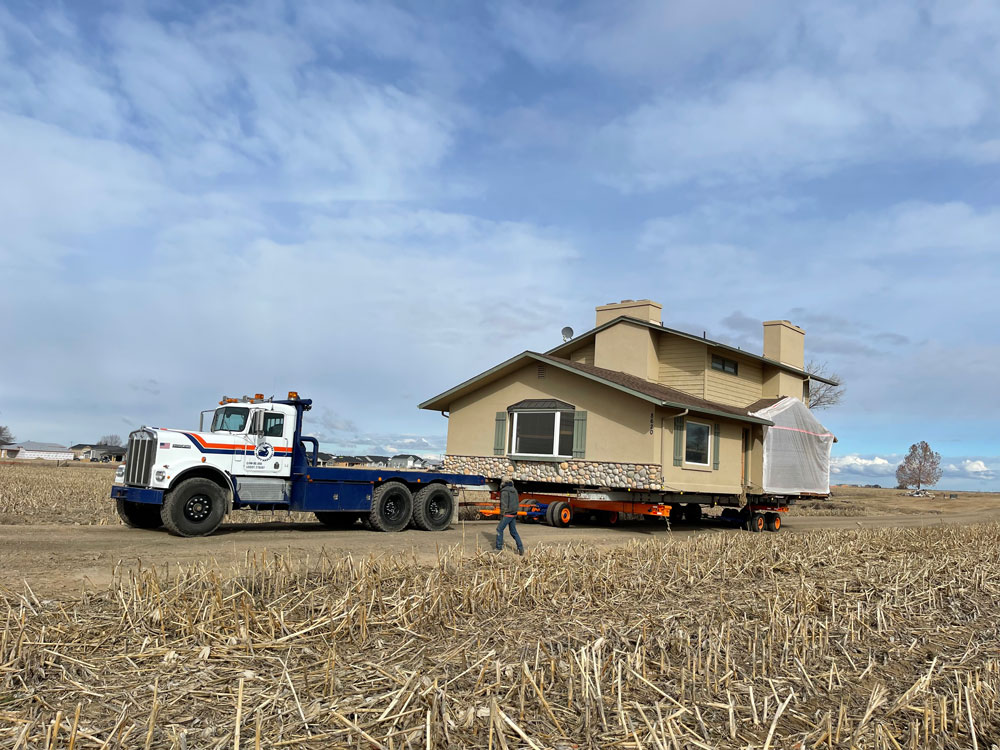
Manufactured home transport is not a standard household move. The home itself becomes an oversized load, and successful transportation depends on preparation, route feasibility, permits, specialized equipment, securement, and careful placement at the destination.
Whether you are moving a single-wide or a multi-section manufactured home, understanding the process before transportation begins can help prevent delays, unexpected expenses, and avoidable structural damage. Companies such as Associated Pacific Movers use specialized equipment and structural-moving experience to coordinate projects that go well beyond an ordinary household relocation.
How Does Manufactured Home Transport Work?
Manufactured homes are constructed differently from conventional site-built homes. Many are designed in one or more transportable sections and incorporate a permanent chassis that allows the structure to be transported when proper procedures are followed.
The U.S. Department of Housing and Urban Development manufactured housing resources provide federal information about manufactured-home construction, certification, installation, and related requirements.
The move itself requires far more than attaching a tow vehicle. Dimensions, structural condition, chassis condition, road clearances, utility disconnections, site access, permit requirements, weather, lifting equipment, and destination readiness can all affect whether a particular move is feasible.
Professional mobile and manufactured home movers evaluate those factors before transportation begins and coordinate the physical move around the characteristics of the home and proposed route.
What Is Evaluated Before a Manufactured Home Is Moved?
- Overall length, width, height, and estimated weight
- Condition of the home and structural components
- Condition and suitability of the chassis
- Origin and destination access
- Turning radius and staging space
- Road and overhead clearances
- Permit and escort requirements
- Utility disconnection needs
- Foundation or support readiness at the destination
Collecting this information early helps determine whether the proposed move is practical and what equipment, permits, labor, and preparation may be required.
Single-Wide vs. Double-Wide Manufactured Home Transport
The number of sections involved can significantly change the transportation process. A single-wide may travel as one major unit, while a double-wide generally requires each section to be prepared and transported separately.
| Transport Factor | Single-Wide | Double-Wide |
|---|---|---|
| Number of major sections | Usually one | Usually two |
| Transportation complexity | Generally lower | Generally higher |
| Separation and reassembly | Usually limited | Often required |
| Transport trips | Often one main load | Multiple loads may be required |
| Destination alignment | Placement and leveling | Placement, leveling, and section alignment |
Moving a Single-Wide Manufactured Home
A single-wide manufactured home can often be transported as one section. That can simplify the physical move compared with a multi-section structure, but width, height, weight, chassis condition, road access, and clearance restrictions still require careful evaluation.
Common Single-Wide Transport Considerations
- Protecting windows and doors during travel
- Checking siding and roof edges for loose materials
- Verifying bridge and overhead clearances
- Confirming sufficient turning space at both locations
- Determining whether escort vehicles are required
Moving a Double-Wide Manufactured Home
A double-wide generally consists of two primary sections. Moving one may require separating those sections, preparing each section independently, transporting them separately, and carefully aligning them again at the destination.
When a project involves a structure that does not fit the typical manufactured-home configuration, broader home and building moving services may be needed to address additional structural and lifting requirements.
What Permits Are Needed to Transport a Manufactured Home?
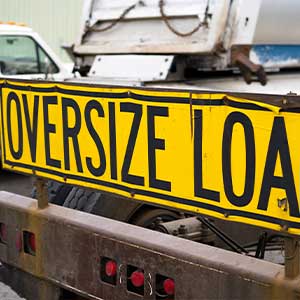
Because manufactured homes frequently exceed ordinary vehicle dimensions, transportation can fall under oversize-load regulations. Requirements vary by jurisdiction, route, home dimensions, transport configuration, and travel conditions.
Depending on the move, permits may establish the approved route, allowable travel times, vehicle requirements, warning equipment, and escort-vehicle requirements. Interstate transportation can become more complicated because requirements may change as the load crosses jurisdictional boundaries.
Common Manufactured Home Transport Requirements
- Oversize or overweight permits when applicable
- Approved transportation routes
- Pilot or escort vehicles when required
- Height and clearance verification
- Travel-time or daylight restrictions
- Warning signs, lights, or flags
- Coordination around temporary construction or road closures
Why Route Planning Matters
A route that works for an ordinary truck may not accommodate a manufactured home. Bridges, railroad crossings, narrow intersections, utility lines, steep grades, traffic controls, road construction, and limited turning areas can all influence route selection.
Route planning must consider the combined dimensions of the home and transport equipment, not just the structure itself.
How Should a Manufactured Home Be Prepared for Transport?
Preparation helps protect the structure and reduces the likelihood of last-minute delays. Interior contents, exterior attachments, utilities, access conditions, and destination readiness should all be addressed before transportation equipment arrives.
Interior Preparation Checklist
- Remove loose possessions and fragile items that could shift.
- Secure cabinet doors, drawers, and built-in components.
- Remove heavy freestanding contents when appropriate.
- Check that windows and exterior doors can be secured.
- Remove or protect items that may be vulnerable to vibration.
Exterior Preparation Checklist
- Remove skirting when required.
- Detach porches, stairs, decks, awnings, and additions that cannot travel with the structure.
- Inspect roof edges and siding for loose materials.
- Clear fencing, vegetation, vehicles, and other obstacles from the exit path.
- Confirm enough space is available for lifting and positioning equipment.
Utilities and Site Preparation
Electrical service, water, sewer, gas, HVAC components, telecommunications, and other connected systems may require qualified professionals to disconnect or prepare them for transportation.
The destination also needs to be ready before the home arrives. Crews may require substantial room to maneuver, position, lift, level, and align the structure.
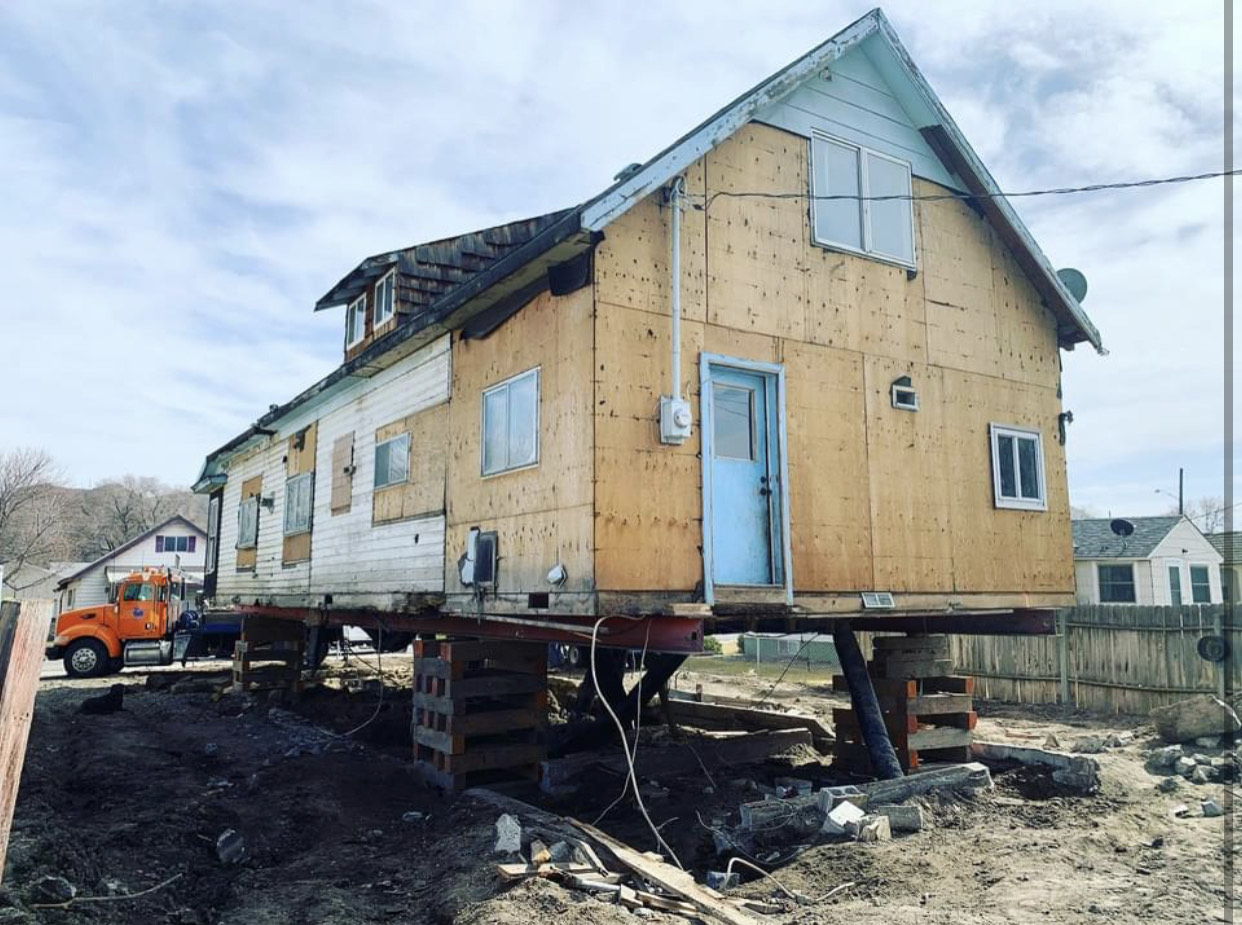
If the project involves raising the structure, adjusting elevation, or coordinating significant foundation work, specialized building raising and house lifting capabilities may be needed before or after transportation.
What Happens During Manufactured Home Transport?
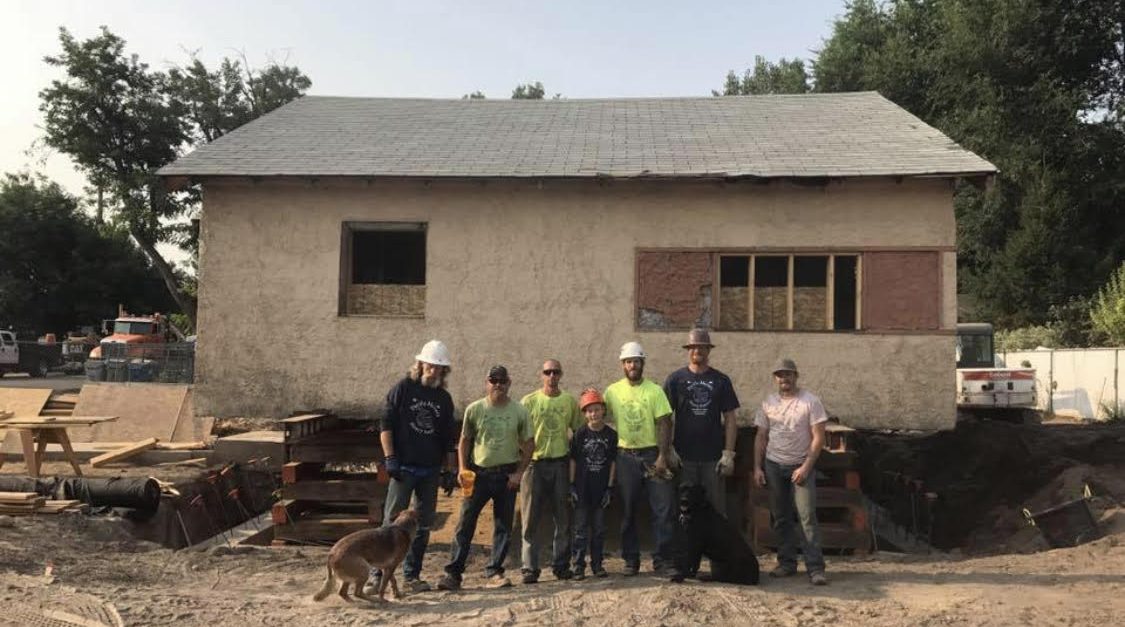
Every project has its own challenges, but most professional manufactured home moves follow a similar sequence from initial evaluation through destination placement.
- Assessment and measurements: The home, surrounding property, proposed route, destination, and transport conditions are evaluated. Accurate measurements help establish the transportation profile and identify possible access limitations.
- Preparation and disconnection: Exterior attachments are addressed, utilities are disconnected by the appropriate professionals, and vulnerable structural components are prepared for movement.
- Lifting and transport preparation: Specialized lifting, support, towing, or transport equipment is positioned according to the home’s design and condition.
- Route and permit coordination: Transportation proceeds according to applicable route restrictions, permit conditions, escort requirements, approved travel windows, and current road conditions.
- Destination placement: The home is maneuvered onto the receiving property and positioned for leveling, alignment, and final setup.
- Reassembly and reconnection: Multi-section structures may need to be aligned and joined before utilities, exterior features, inspections, and finish work are completed.
What Equipment Is Used for Manufactured Home Transport?
The exact equipment varies according to the structure, existing chassis, dimensions, access conditions, and route. The objective is to maintain control and stability during lifting, positioning, transportation, and placement.
Common Equipment Used During a Manufactured Home Move
- Heavy-duty towing and transport vehicles
- Hydraulic jacks and lifting systems
- Structural supports and cribbing
- Specialized carriers or transport assemblies
- Load securement equipment
- Pilot or escort vehicles when required
Some projects also involve machinery, lifting devices, construction equipment, or other unusually heavy cargo. In those situations, professional heavy equipment hauling resources can become an important part of the overall transportation plan.
What Affects Manufactured Home Transport Costs?
There is no universal price for transporting a manufactured home because mileage is only one part of the calculation. Home dimensions, route conditions, permits, preparation, labor, equipment, access, and destination requirements can all affect the total cost.
Major Manufactured Home Transport Cost Factors
| Cost Factor | Why It Matters |
|---|---|
| Home size | Wider, longer, taller, or multi-section homes may require additional equipment, labor, and transportation. |
| Distance | Longer routes generally increase transportation time, fuel usage, labor, and scheduling requirements. |
| Permits and escorts | Oversize requirements can add permit fees, pilot vehicles, and route restrictions. |
| Structure condition | Older or damaged structures may require additional preparation before movement. |
| Origin access | Tight spaces, soft ground, steep grades, or obstructions can make extraction more difficult. |
| Destination access | Restricted entrances or limited maneuvering room can complicate final placement. |
| Exterior attachments | Porches, decks, stairs, awnings, skirting, and additions may need separate handling. |
| Setup requirements | Leveling, section alignment, foundations, utility work, and finish work can affect the total project cost. |
Why Per-Mile Pricing Can Be Misleading
Two manufactured homes traveling the same distance can require dramatically different amounts of labor and equipment. A straightforward single-section move with easy access may be very different from a multi-section structure that requires extensive preparation, escorts, difficult turns, and complex placement.
For that reason, a detailed assessment is usually more useful than relying on a generic transportation price per mile.
How Do You Choose a Manufactured Home Transport Company?
Moving a manufactured home requires a specialized transportation operation rather than an ordinary household moving crew. Experience with structural transportation, proper equipment, route planning, permitting, securement, and difficult access conditions should all influence the decision.
Reviewing the company’s broader structural moving and specialized transport services can also help determine whether the crew has experience with projects that require lifting, oversized transportation, and unusual site conditions.
Questions to Ask Before Hiring a Manufactured Home Mover
- How will the home and proposed route be evaluated?
- Who handles permits and route coordination?
- Could pilot or escort vehicles be required?
- What preparation is included in the estimate?
- What work must be completed by separate contractors?
- How will the structure be protected during transportation?
- What happens if weather or road conditions change?
- What costs are included and excluded from the estimate?
Warning Signs to Take Seriously
- A quote provided without requesting dimensions or route information
- No discussion of permit or transportation restrictions
- Unclear licensing or insurance information
- No explanation of owner preparation requirements
- A vague estimate that does not define the work being performed
- No clear plan for difficult origin or destination access
Frequently Asked Questions About Manufactured Home Transport
Can any manufactured home be moved?+
Not necessarily. The home’s age, condition, chassis, dimensions, structural integrity, route, applicable requirements, and destination access can all affect whether transportation is practical. An evaluation should be completed before scheduling a move.
Do you need a permit to move a manufactured home?+
Permits are commonly required when a manufactured home exceeds ordinary vehicle dimensions. Requirements vary by jurisdiction, route, dimensions, and transportation configuration, so they should be confirmed for the specific move.
What is the difference between moving a single-wide and a double-wide?+
A single-wide can often travel as one section, while a double-wide generally consists of two sections that are transported separately and joined again at the destination. Multi-section homes can therefore require additional preparation, transportation, alignment, and finish work.
How should the inside of a manufactured home be prepared for transport?+
Loose and fragile belongings should generally be removed, cabinets and drawers secured, and items that could shift during transportation addressed before the move. The moving company can provide specific preparation instructions based on the home and transportation conditions.
How much does manufactured home transport cost?+
Cost depends on factors such as home size, distance, route restrictions, permits, escorts, preparation, structure condition, access, equipment requirements, and destination setup. A site-specific estimate is generally more reliable than a generic per-mile figure.
Can a manufactured home be transported to another state?+
Interstate transportation may be possible, but requirements can become more complex because the move may involve permits, routes, and transportation rules from multiple jurisdictions. Feasibility should be evaluated for the specific home and proposed route.
How far in advance should manufactured home transport be scheduled?+
Earlier planning is generally better, especially for multi-section homes, long-distance routes, difficult access, permit-heavy moves, or projects that require coordination with utility contractors, installers, or foundation work.
Planning a Manufactured Home Move?
Accurate planning starts with the home’s type, dimensions, condition, origin, destination, access conditions, and transportation distance. Once those details are available, the equipment, route, permits, preparation, and scheduling requirements can be evaluated.
When you are ready to discuss the details of a manufactured home relocation, request a manufactured home transport estimate and provide as much information as possible about the structure and proposed move.